
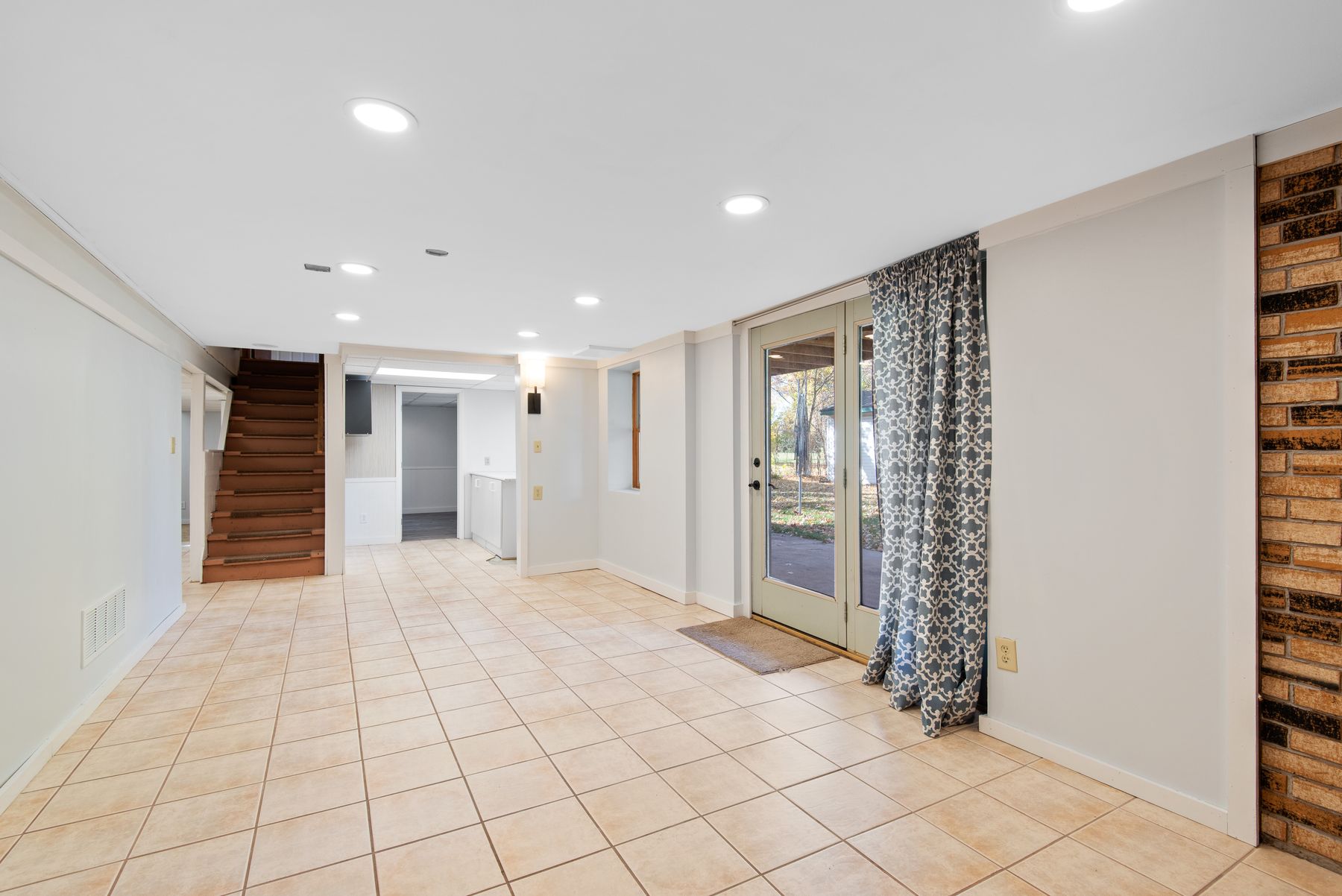
A basement or lower level can affect air quality throughout your home. Moisture, airborne particles, chemical pollutants, and contaminants disturbed during renovation can all contribute to indoor environmental concerns.
You can screen some basement air-quality concerns with simple tools, while others require professional sampling or laboratory analysis. This guide explains what you can check yourself, which results you can reasonably interpret at home, and when professional testing is the better next step. You will also see when a do‑it‑yourself monitor is enough and when to call a pro.
Start with the reason you’re concerned, whether it’s moisture or musty odors, an upcoming renovation, chemical odors, or unexplained dust. The right test depends on the source you are trying to identify. The steps below show you how.
TL;DR
- If mold is clearly visible, sampling usually isn’t needed simply to prove that mold exists. Correct the moisture source first. Targeted testing may still help when growth is hidden, the extent is unclear, or you need verification.
- Use low‑cost sensors as informational tools and verify persistent problems with targeted tests or a qualified professional.
Know What You Are Looking For
As a homeowner, start by identifying which of these common concerns best matches what you are seeing, smelling, or planning to disturb:
Moisture and Mold
Mold growth signals a moisture problem, not a testing problem. Aim to keep relative humidity below 60%, ideally 30–50%, to discourage growth.
Volatile Organic Compounds (VOCs)
Volatile organic compounds are gases released from products and materials. Levels indoors often exceed those outdoors. Formaldehyde is a well‑known VOC from some composite woods and finishes.
Carbon Dioxide (CO2)
Carbon dioxide can be useful as a general indicator of how well an occupied space is ventilated. Interpret residential readings as ventilation trends rather than comparing them with an occupational exposure limit.
Asbestos
Older flooring, mastics, insulation, roofing products, and other building materials may contain asbestos. The risk increases when you cut, sand, scrape, demolish, or otherwise disturb suspect materials.
Do a Smart Walk‑Through First
Before buying gear, do a 20‑minute inspection. Look for water stains, wall efflorescence, peeling paint, musty odors, and rusted metal. Place a $10- $20 hygrometer in the basement and log relative humidity for a week. Keep indoor RH under 60% and aim for 30–50%. If it sits higher, a dehumidifier and drainage fixes usually beat any air test.
In coastal communities such as La Jolla, Del Mar, Encinitas, and Carlsbad, also watch for condensation and persistently damp, poorly ventilated areas.
Choose the Right Tests
For problems you can screen yourself, use the methods below. When the question requires material identification, targeted air sampling, or documented lab results, professional testing is more appropriate.
Moisture and Mold
Visible mold generally doesn’t need laboratory testing simply to confirm that it is mold. A professional assessment may still be useful when growth may be hidden, the moisture source is unclear, or you need documentation before or after remediation. Use RH readings and visual checks to verify success.
Particles (PM2.5)
An optical particle counter or consumer monitor can reveal dust and smoke spikes. Treat these as informational, not regulatory, and use results to guide filtration or source control.
VOCs and Formaldehyde
If you need to identify specific compounds rather than watch a general trend, targeted sampling and laboratory analysis are more informative. If you notice persistent odors or irritation, focus on source removal and ventilation. Consider a lab canister or passive badge test if the problem persists. EPA’s guidance explains what VOCs are and where they come from.
CO2 as a Ventilation Clue
A CO2 monitor helps assess whether stale air is building up. There’s no home standard, but if numbers routinely climb compared with outdoor levels, bring in more outdoor air. OSHA’s 5,000 ppm workplace limit provides a useful upper reference only.
What to Test and How to Decide
Use the table below to separate what you can reasonably screen yourself from conditions that call for professional inspection, sampling, or laboratory analysis.
| Pollutant/Issue | Why It Matters | Best DIY Screening | When Professional Testing or Evaluation Helps |
| Moisture/Mold | Drives odors, damage, and allergies | Hygrometer logging; visual check; clean visible mold | Hidden or widespread growth, unclear moisture sources, contaminated-water events, or when pre-/post-remediation documentation is needed |
| PM2.5 | Smoke and dust reduce IAQ | Consumer PM monitor to find spikes and test filters | Sensitive occupants or complex source tracing |
| VOCs/Formaldehyde | Gases from products and materials | Reduce sources and ventilate; basic TVOC trend monitor | Persistent odors or symptoms; order lab analysis |
| Asbestos | Disturbing asbestos-containing materials can release respirable fibers. | Note the age and condition of suspect materials; do not cut or sample them yourself | Before disturbing suspect flooring, mastics, insulation, roofing, wall materials, or other older building products. |
How to Screen Each Concern and When to Escalate
Simple initial checks give homeowners confidence when identifying indoor hazards in their lowest living spaces. Clear triggers show exactly when DIY monitoring is enough and when reaching out to local, certified specialists protects your home’s air quality.
- Moisture and Mold: Track humidity for at least a week and keep RH between 30–50%. Address leaks or drainage issues first, and seek professional assessment for hidden, extensive, or sewage-related contamination.
- Particles (PM2.5): Place the monitor away from vents and windows and track readings for 24–72 hours. Use results to compare trends, sources, and filtration performance rather than as indoor pass-or-fail standards.
- VOCs and Formaldehyde: Remove or seal obvious chemical sources and improve ventilation first. If odors or symptoms persist, targeted professional sampling can identify specific VOCs or formaldehyde that consumer TVOC sensors cannot distinguish.
- CO2 as a Ventilation Proxy: Use CO2 readings to monitor ventilation trends during occupancy. If levels steadily rise, increase outdoor-air ventilation where appropriate. CO2 is a ventilation indicator, not a primary residential toxin.
Interpret Results and Plan Fixes
Treat the results as clues to the source, not just numbers to pass or fail. High moisture points toward water control, while renovation-related risks may call for asbestos or lead testing, whereas persistent odors may warrant targeted VOC or mold evaluation.
Does your consumer monitor repeatedly show a problem but cannot identify its source? That is the point to move from DIY screening to targeted professional sampling.
For San Diego-area properties, our environmental testing specialists can determine the right professional test, collect the appropriate samples, and provide written laboratory results to guide your next step.
Examples
These examples show when a homeowner can resolve a straightforward issue and when professional testing becomes useful.
Resolving Basement Humidity
After a spring thaw, a homeowner logs 65–70% RH and smells mustiness in the basement. They add downspout extensions, seal a cracked utility penetration, and run a dehumidifier to 45% RH.
Odor disappears, and no sampling is needed because moisture control fixed the source.
Actionable Steps / Checklist
Use this checklist for the steps you can take yourself first. If those steps point to hidden contamination, suspect building materials, or a problem that needs lab confirmation, move to professional testing.
- Buy a hygrometer and log basement RH for 7 days. Target 30–50%.
- Screen PM2.5 with a consumer monitor. Test how a HEPA purifier changes readings.
- Declutter chemicals. Store paints/solvents in sealed containers outside the living space.
- Use a CO2 monitor to gauge ventilation. If it rises during use, add outdoor air.
- Re‑test after major projects or seasonal changes.
Glossary
These terms can help you understand testing results and discuss next steps with an environmental professional.
- VOCs: Volatile organic compounds, gases released from products, paints, and materials.
- Formaldehyde: A common VOC from some composite wood and finishes that can irritate eyes and airways.
- Relative Humidity (RH): How much moisture is in the air compared with the maximum it can hold at that temperature.
- Carbon Dioxide (CO2): Exhaled gas used as a ventilation indicator at home.
FAQ
Q: Do I need professional mold testing?
A: Not simply to confirm obvious visible mold. Mold testing can be useful when growth is hidden, the extent or source is unclear, or you need documented results before or after remediation. A professional assessment can also determine whether moisture mapping, air sampling, surface sampling, or no sampling is appropriate.
Q: Can one all‑in‑one monitor replace lab testing?
A: Use consumer sensors to spot trends and check whether simple changes help. If you need to identify a specific contaminant or document the condition, professional sampling and laboratory analysis are the next step.
Q: What PM2.5 number is safe indoors?
A: The United States uses outdoor health standards, not indoor ones. As context, EPA’s annual PM2.5 standard is 9 µg/m3, and WHO’s health guideline is 5 µg/m3 annual and 15 µg/m3 24‑hour. Lower is better indoors.
Final Thoughts
The best basement air-quality test is the one that answers the problem you actually have. Moisture, mold, VOCs, asbestos, lead, and nuisance dust each require a different approach.
Use simple monitors where they provide useful screening. However, don’t expect one device to identify every environmental concern in a home.
Does your San Diego County property need more than DIY screening? Rarefied Air Environmental can select the appropriate professional test, collect targeted samples, and provide documented laboratory results for the specific concern.