

Mold concerns many homeowners, and for good reason. After a leak or musty smell, you want clear answers fast. DIY mold kits promise quick results, while professional testing offers deeper diagnostics. The right choice depends on your goal, your risk tolerance, and what is actually happening in your home, apartment, or commercial space.
For San Diego County properties, especially in coastal communities, moisture history, ventilation, and building conditions matter just as much as the test result itself. This guide explains what each option can and cannot do, when a home kit is fine, and when to call a pro.
Does your concern involve a musty odor, recent water damage, a real estate timeline, or recurring mold? Our mold testing inspectors can perform a professional mold inspection with air and surface sampling when appropriate, lab analysis, and a clear written report that explains the findings.
TL;DR
- Use DIY kits only for basic screening or curiosity. They rarely diagnose the source of a problem.
- Hire a professional when visible growth is extensive, recurring, connected to ongoing moisture, affecting sensitive occupants, needed for real estate or documentation purposes, or coming from a source you cannot clearly identify.
- There are no federal numeric standards for mold levels. Context and moisture control matter more than a single test result.
- If you see mold, fix the moisture and clean it up. Federal health agencies don’t routinely recommend testing.
How Mold Testing Works
Mold needs moisture. Sampling can help confirm what is present, but the inspection and moisture assessment are what help explain why it’s growing and where moisture may be entering or lingering.
Common DIY methods:
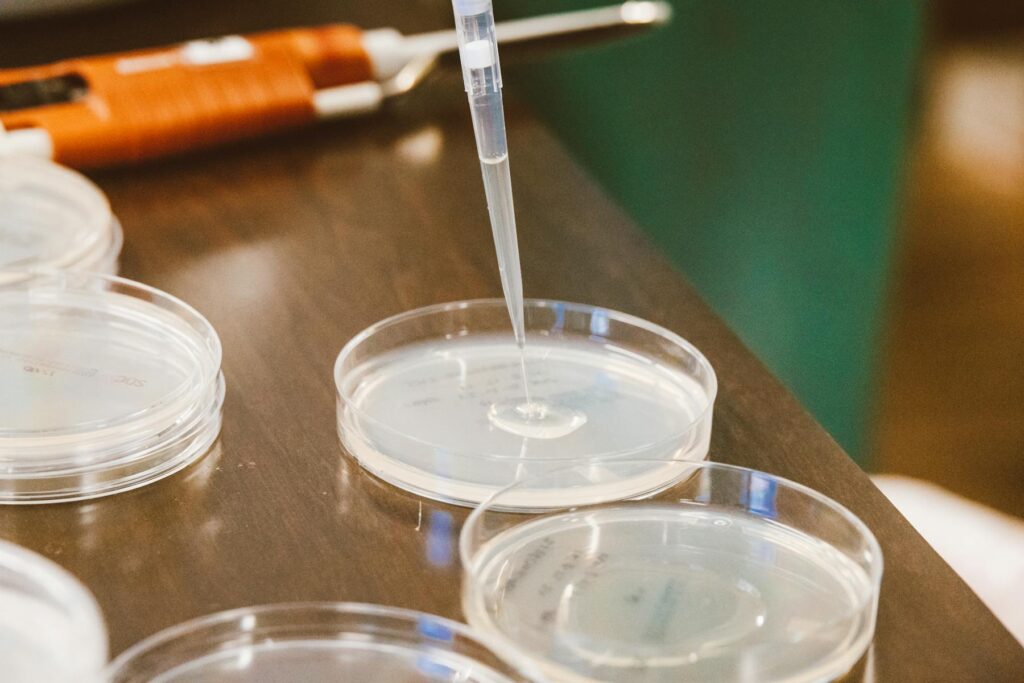
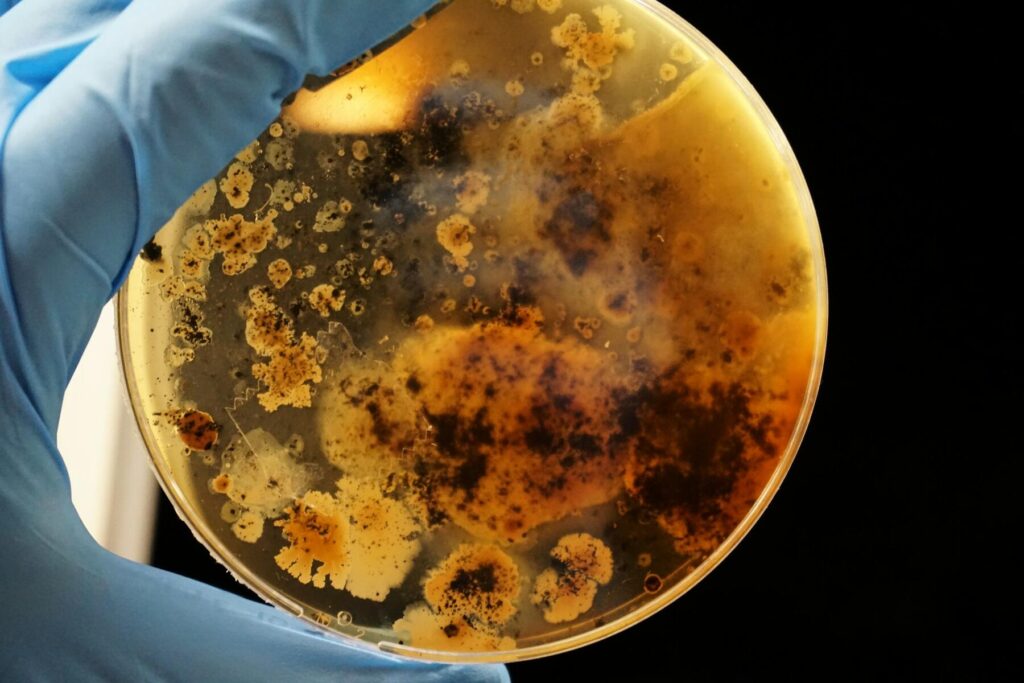
- Settle plates or petri dishes capture what lands on a nutrient gel over time. These often grow something because spores are everywhere, but they don’t pinpoint a source or quantify risk.
- Swabs or tape lifts collect a small amount of material from a surface for lab identification. They can confirm mold on that spot, but still don’t explain why it grew.
Professional methods focus on the building, the moisture source, and whether sampling will actually help guide next steps:
- Visual inspection and history of leaks or humidity issues.
- Moisture mapping with meters and, sometimes, infrared imaging to detect wet materials.
- Air sampling with calibrated pumps and spore traps to compare indoor and outdoor air under the same conditions.
- Surface sampling to verify cleaning success or identify what is on a material.
- Chain of custody to an accredited lab and an interpretation that considers building conditions, weather, and sampling limits.
Agencies emphasize that if you can see or smell mold, start with moisture control and cleanup. Testing rarely changes that first step. Our mold testing process follows this practical approach: visual inspection, air and surface sampling when useful, laboratory analysis, and a detailed report with findings and recommendations.
DIY Mold Kits vs Professional Testing: A Comparison Guide
Choosing between a store-bought kit and a professional assessment often determines whether a small issue stays small or turns into a costly headache.
| Factor | DIY Mold Kits | Professional Mold Testing |
| What You Get | Basic presence/ID at a spot; often, a petri dish grows colonies | A building-focused assessment plus targeted sampling and interpretation |
| Best For | Curiosity, small visible spots, simple follow-up checks | Hidden or widespread issues, recurring leaks, health-sensitive homes, transactions |
| Reliability | Varies; settle plates are easily misleading | Higher when paired with inspection, outdoor controls, and lab QA |
| Finds Source? | Rare; doesn’t have moisture | Yes, moisture diagnostics and targeted sampling |
| Turnaround | Fast for plates; days for lab ID | Days to a week with a written report |
| Documentation Needs | Usually limited because DIY kits lack inspection context, chain of custody, and professional interpretation | More useful for insurance, real estate, rental, or remediation documentation when performed by an experienced professional using documented methods, proper sample handling, and accredited lab analysis |
| Standards/Guides Used | None specific | Industry standards and state rules were applicable |
If you’re comparing options because a property decision depends on the answer, a professional report is usually more useful than a store-bought kit.
We provide mold testing reports that document the inspection, sampling approach, lab findings, and recommended next steps. We aim to help homeowners, buyers, property managers, and remediation teams make decisions based on evidence rather than guesswork.
When a DIY Mold Kit Is Enough
DIY can be reasonable if:
- You have a small, obvious spot on a nonporous surface, such as tile, glass, or sealed metal, and want a quick confirmation with a tape lift or swab sent to a reputable lab.
- You’re checking whether cleaning worked on a small area and plan to repeat if needed.
- You’re screening out of curiosity before deciding whether to bring in a pro.
Good practices:
- Favor surface sampling analyzed by an accredited environmental microbiology lab.
- Avoid settling plate kits for decision-making; they collect whatever falls out of the air and cannot quantify normal vs. abnormal.
- Regardless of results, fix moisture and dry wet materials quickly.
When to Hire a Professional
Bring in a qualified inspector if any of these apply:
- Visible mold covers more than a small patch or keeps returning after cleaning.
- You smell mustiness but cannot find the source.
- There was a significant leak, flood, or chronic humidity problem.
- Someone in the home is an infant, an older adult, immunocompromised, living with asthma, COPD, significant allergies, or has been advised by a clinician to be extra cautious about dampness or mold.
- You need documentation for a sale, rental dispute, insurance, or work clearance.
- The HVAC system may be contaminated or wet.
What a strong professional assessment includes:
- A written scope, visual and moisture inspection, and a sampling plan, only if it will inform action.
- Proper sample handling, outdoor control samples for air testing, and accredited laboratory analysis.
- A clear report that links findings to visible conditions, moisture clues, sample results, and practical next steps for cleanup, remediation, or post-remediation verification.

How Pros Interpret Results Without the Hype
Expert interpretation helps make sense of raw data within your home’s actual conditions. This means comparing indoor samples with same-day outdoor control samples while accounting for weather, ventilation, moisture history, and building conditions.
- No federal numeric limits exist for acceptable indoor mold levels. Pros compare indoor to outdoor air, look for water-damage indicators, and consider building context.
- A single air sample is only a moment in time. It must be interpreted in the context of inspection findings and outdoor conditions.
- Surface samples confirm what is on a material, but cannot alone tell you about the overall air quality.
- ERMI, a DNA-based dust test developed as a research tool, isn’t recommended for routine public decision-making. It can be a single data point, yet it shouldn’t replace inspection and moisture diagnostics.
Our team doesn’t just hand over lab numbers. We interpret air and surface sampling results alongside inspection findings to determine whether the data point to normal background conditions, a likely water-damage source, or the need for additional cleanup.
Standards, Licensing, and Labs to Know
Recognized industry guidance can help keep mold assessment and remediation decisions consistent, but it’s important to understand what each standard does. ANSI/IICRC S520 is a remediation standard, while mold sampling still depends on a professional inspection plan, proper collection methods, and qualified lab analysis.
- Professional remediators commonly follow the ANSI/IICRC S520 Standard for Professional Mold Remediation. Inspectors and remediators may reference it during assessments and cleanup.
- Several states license mold assessors and remediators, including New York and Texas. California doesn’t have a dedicated state license for mold inspection, assessment, or remediation. San Diego property owners should look for relevant experience, certifications, insurance, clear reporting, sound sampling rationale, and proper lab practices.
- Choose laboratories accredited for environmental microbiology when collecting air, surface, or bulk samples. Ask how the results will be interpreted in relation to the inspection findings.
We support this process with professional mold testing, documented sample collection, laboratory analysis, and reports designed to help you understand what to do next.
Examples
These scenarios show how the right level of testing can prevent guesswork and help property owners choose the next practical step.
Small Bathroom Spot, Big Peace of Mind
A homeowner notices a 3-inch dark patch on bathroom tile near a recently fixed leak. They clean the nonporous surface, improve ventilation, and monitor the area for recurrence.
A DIY tape lift sent to an accredited lab may help confirm whether the residue is fungal, although it cannot prove that no spores remain. Because the spot was small, the source was obvious, and moisture was controlled, they didn’t need broad air testing. Six weeks later, the patch has not returned.
Musty Odor, No Visible Growth
A family keeps smelling musty odors in a finished basement after heavy summer rains. A professional inspector conducts a moisture survey, finds elevated moisture behind baseboards, and collects targeted air samples with matching outdoor controls. Results show elevated water-damage indicator spores in the affected rooms.
The report recommends drainage fixes, dehumidification, and selective wall opening with containment. Post-remediation verification confirms the presence of ry materials and normal indoor-to-outdoor spore patterns. Without the building-focused assessment, a DIY plate kit would have grown mold but still missed the hidden wet cavity.
Actionable Steps / Checklist
A clear plan of action helps you regain control when moisture issues threaten your comfort and property. Following these steps protects your investment, where prompt drying and professional verification help maintain your home’s pristine condition.
- Stop the water. Fix leaks, improve drainage, and run dehumidifiers as needed.
- Dry fast. Aim to dry wet materials within 24 to 48 hours.
- If you can see mold, clean or remove affected materials and correct the moisture source.
- For DIY sampling, prefer surface tape-lifts analyzed by an accredited lab. Skip the settle plate kits for decision-making.
- Hire a pro if growth is widespread, the source is unclear, HVAC may be involved, sensitive occupants are affected, or documentation is needed.
- Look for experience, relevant certifications, insurance, clear reporting, and proper lab procedures rather than a dedicated state mold license.
- Ask any professional about their inspection plan, sampling rationale, outdoor controls, lab accreditation, and how they will interpret results.
- After remediation, confirm dryness, visual cleanliness, and odor-free conditions. Use targeted verification sampling if the scope or stakeholders require it.
- Keep indoor humidity as low as practical, ideally around 30% to 50% and at least below 60%, while ventilating kitchens, bathrooms, laundry areas, and other moisture-prone spaces.
- If you’re unsure whether your situation needs sampling, Rarefied Air Environmental can review the visible conditions, moisture history, and reason for testing, then recommend the most useful next step.
Glossary
Clear definitions transform complex concepts into simple tools you can use to protect your family’s health and home environment.
- Spore Trap: A cassette used with a pump to capture airborne particles for microscopic identification.
- Tape-Lift: A piece of clear adhesive pressed to a surface to collect material for lab analysis.
- Chain of Custody: Documentation that tracks samples from collection to lab to ensure integrity.
- AIHA-Accredited Lab: A laboratory recognized under AIHA’s EMLAP program for environmental microbiology.
- ERMI: A research index using DNA-based analysis of dust to estimate moldiness; not for routine public decisions.
- Moisture Map: A diagram showing where building materials are wet, based on meter readings and inspection.
- Post-Remediation Verification: Checks performed after cleanup to confirm dryness, cleanliness, and acceptable conditions.
- Clearance Testing: Targeted sampling and inspection used to verify that remediation met defined criteria.
FAQ
Q: Do I need to test if I can see mold?
A: Often no. If mold is visible, the priority is to fix the moisture source and clean or remove affected materials. Testing is more useful when the source is unclear, hidden growth is suspected, HVAC may be involved, documentation is needed, or sensitive occupants are part of the decision.
Q: Are DIY mold kits accurate?
A: Surface kits can confirm mold on that spot. Settle plate kits are unreliable for decisions and often cause false alarms.
Q: Is there a safe or legal limit for mold indoors?
A: No federal numeric standard exists. Pros use comparison to outdoor air, building context, and visual and moisture findings.
Q: How fast should I dry after a leak?
A: Dry as fast as possible. Drying within 24 to 48 hours greatly reduces the chance of mold growth.
Q: Will my state require a licensed pro?
A: Some states license mold assessors and remediators and may separate those roles. California doesn’t currently have a dedicated state license for mold inspection, assessment, or remediation. Focus on experience, relevant certifications, insurance, documented procedures, and clear reporting.
Final Thoughts
Choose the tool that answers your real question. If you just want to confirm a small, isolated spot, a simple surface sample may be enough in some cases. To investigate a hidden source, evaluate a musty odor, support a real estate or rental decision, or document cleanup, professional testing gives you a clearer path forward.
Rarefied Air Environmental helps San Diego County property owners connect inspection findings, air or surface sampling results, and lab reports to practical next steps.