
Asbestos testing prices in California vary a lot, and so do the rules. The right budget depends on what you are disturbing, where the building sits, how fast you need results, and which local air district enforces the job. Getting this right matters because testing rules are tied to health and to permits.
This guide explains typical asbestos testing cost ranges in California. You’ll also understand how those costs usually play out for San Diego County renovations, demolitions, property transactions, and post-abatement clearance work.
Do you already know which materials your San Diego project will disturb? Rarefied Air Environmental can scope the survey to that work area so you can budget for the real job, not a generic statewide average.
TL;DR
- Expect $20-$60 per lab-only PLM sample, with layered roofing often higher. On-site surveys typically start around $300-$700 for small remodel scopes.
- Full pre-renovation or pre-demolition building surveys for houses usually cost around $600-$1,500+. Large or complex buildings cost more.
- Air clearance testing after abatement is often priced per PCM sample (a common lab fee of $20-$50) plus technician time.
- In California, whether you need an asbestos survey before renovation or demolition depends on the local air district and the type of property or facility.
- In San Diego County, Rule 1206 requires a facility survey for regulated facilities, regardless of age, while some single-family and limited remodel situations are handled differently.
What Drives Asbestos Testing Cost in California
Several factors influence the final price of your inspection, from the number of samples taken to how quickly you need the results delivered. Recognizing these variables helps you plan your San Diego renovation with financial clarity and peace of mind. Several variables shape your final bill:
- Scope of work: Testing only a kitchen wall costs far less than surveying an entire house. More suspect materials mean more samples.
- Turnaround time: Same-day or weekend analysis adds rush fees.
- Method: PLM (polarized light microscopy) is the standard, lower-cost bulk test. TEM (transmission electron microscopy) costs more but is sometimes required for certain materials or school clearances. Air testing by PCM (phase contrast microscopy) is billed per cassette and is separate from bulk testing.
- Who performs the work: In many California air districts, the inspector must be a Cal/OSHA Certified Asbestos Consultant (CAC) or meet specific certification requirements. That professional compliance adds value and some cost.
- Local rules: Local air district rules affect both the scope and the total project cost. In San Diego County, regulated projects can require Rule 1206 notifications, supporting paperwork, and fees, so the testing cost is only one part of the compliance budget.
If your scope includes old vinyl tile, sheet flooring, mastic, or adhesives, our guide on asbestos in flooring explains why those materials can affect both sampling needs and project cost.
For San Diego County remodels and demolitions, Rarefied Air Environmental can quote the survey based on sample count, property size, and turnaround time. This gives you a more useful number than a flat online estimate.
Typical Price Ranges in 2026
If you’re budgeting for a remodel, demolition, or property transaction in San Diego County, use these numbers as planning ranges only. Actual pricing depends on the number of samples, the size of the work area, site access, and the speed at which you need results.
Here are typical market ranges you can use for early budgeting, not fixed statewide prices or guaranteed San Diego rates for asbestos testing:
- Lab-only bulk sample (PLM): About $20-$60 per sample when you drop off or mail to a lab; layered roofing and special methods can run $100-$150+ per sample. As you compare testing options, it also helps to know what the final report will show; our guide to understanding your asbestos test results explains common lab terms, asbestos percentages, and air testing measurements.
- A small on-site check for a limited remodel area: Around $300-$700 total is common in California markets. This typically includes a site visit, a short report, and a handful of PLM samples.
- Full pre-renovation or pre-demolition survey for a single-family home: About $600-$1,500+, depending on age, size, and how many materials must be sampled.
- Air clearance testing (post-abatement): PCM lab analysis is often billed separately from field time and reporting. For school projects under AHERA, clearance often relies on TEM, although PCM can be allowed in limited circumstances for certain project sizes.
National cost trackers place full-house survey ranges in the mid-3s to low-4s. Large commercial surveys can reach into the tens of thousands due to their size and complexity. For a deeper breakdown of requirements for offices, retail spaces, warehouses, and other non-residential buildings, see our guide to asbestos testing for commercial properties.
Prices swing with sample counts, turnaround time, and the extent of the property that needs to be surveyed. For our asbestos testing, costs vary by the number of samples and the property’s size. We encourage you to request a customized quote to make sure you get the best price for your service needs.
What California Law Requires Before You Cut or Demolish
Before demolition or any renovation that may disturb suspect materials, make sure your survey complies with local air district rules. It’s also important to check the type of property involved and the actual materials in your work scope.
In San Diego County, regulated facilities must complete a Rule 1206 facility survey before the project begins, and building departments may also require related hazardous-material paperwork.
For more background on local requirements, read our overview of San Diego asbestos regulations, which explains why inspections are commonly required before non-residential renovation or demolition work.
Federal Anchors
EPA’s AHERA sets the 1% threshold for asbestos-containing material (ACM) and governs school inspections and clearance methods. EPA’s asbestos NESHAP defines regulated ACM (RACM) and sets demolition and renovation requirements.
Cal/OSHA Thresholds
California’s construction asbestos standard defines asbestos-containing construction material (ACCM) at more than 0.1% by weight. That lower, state-specific threshold can expand the scope of what must be handled under asbestos controls on construction projects.
Local Air District Surveys
South Coast AQMD has its own survey rules for facilities and requires that the asbestos survey report be prepared and signed by a Cal/OSHA-certified asbestos consultant.
Meanwhile, the Bay Area Air Quality Management District has its own asbestos demolition and renovation program, including separate notification rules. This is another reason statewide articles should not treat every California project as if the requirements are identical.
On the other hand, San Diego County Rule 1206 and Sacramento Rule 902 both apply their survey requirements to regulated facilities without using building age as the main trigger. However, that doesn’t mean every residential project is treated the same way.
Who Can Test
California recognizes credentials such as CAC and CSST, but the exact survey qualification depends on the district and the project. In San Diego County, EPA Building Inspector training is required for facility surveys, and SST or CAC credentials are also accepted.
Which Labs Count
For AHERA-regulated school work, laboratories must be accredited by NIST’s NVLAP. Most reputable labs serving California hold NVLAP for asbestos PLM/TEM.
California Asbestos Testing Pricing Options at a Glance
Comparing different service levels side-by-side simplifies your decision-making and helps you select the right fit for your specific property. This overview highlights the most effective ways to handle safety requirements in North Park or Ocean Beach while respecting your time and resources.
| Factor | DIY lab-only bulk sample (PLM) | Limited pre-renovation survey by CAC | Full building survey (house) | Air clearance testing (post‑abatement) |
| Typical Cost (2026) | $20-$60 per sample; layered roofing $100-$150+ | ~$300-$700 for a small scope plus per-sample PLM fees | ~$600-$1,500+; higher for large/older homes | PCM lab $20-$50 per sample + tech time; TEM for school clearances costs more |
| When Regulators Accept It | Often NOT accepted for permitted demo/renovation; schools and many districts require a certified survey | Commonly accepted for small remodel areas when the survey covers all disturbed materials | Required before demolition; often prudent before major renovations | Required by project specs or regulation; school clearance often uses TEM, though AHERA also allows PCM in limited situations. |
| Pros | Cheapest, fastest for spot checks | Compliant report, right scope for permits | Thorough, reduces surprises | Documents safe re‑occupancy |
| Watch Outs | May not meet local rules; improper sampling skews results | Scope creep occurs when more materials are added mid-project | More samples, higher cost, and longer lead time | Fails add re‑cleaning and retesting costs |
How Asbestos Testing Works
A transparent look at the scientific methods used in the lab demystifies the technical side of property safety. These insights allow you to choose the most effective approach for your project, protecting the health of your family and neighbors in coastal communities like Carlsbad.
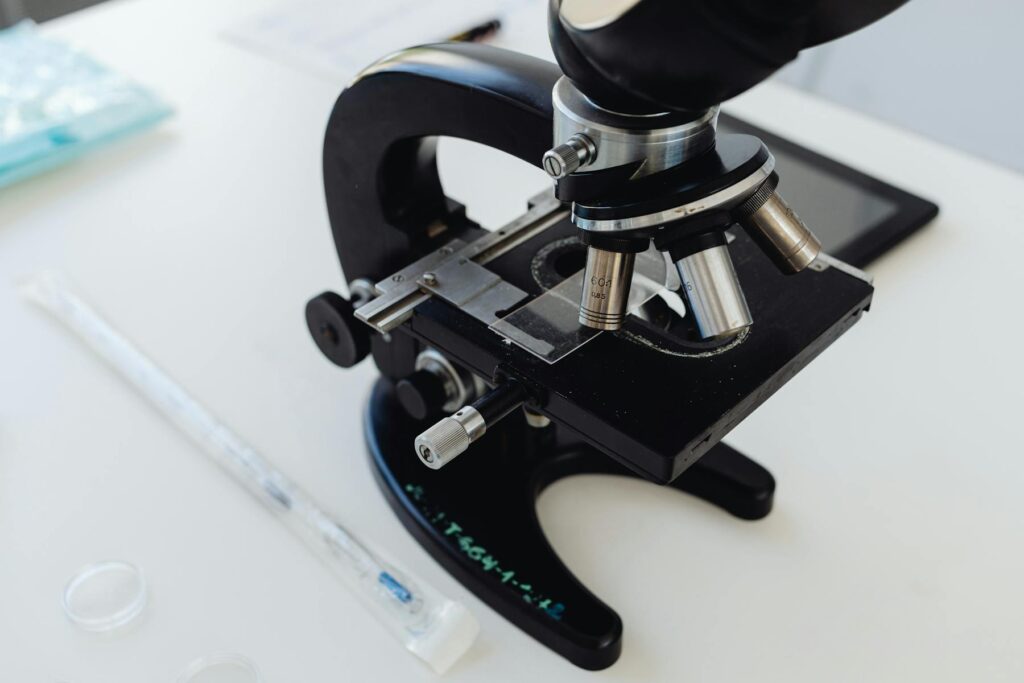
- PLM (polarized light microscopy): The standard bulk test for building materials. A small piece of suspect material is examined to identify asbestos type and estimate percent content. It’s widely accepted for pre‑renovation surveys.
- TEM (transmission electron microscopy): A more sensitive and specific method. Often used for “NOB” materials (non‑friable organic‑based materials, like some flooring mastics) that PLM can under‑detect, and for school air clearances under AHERA.
- PCM (phase contrast microscopy): A fiber count method for air samples. It counts fibers that meet size rules, but doesn’t confirm mineral type. It’s commonly used for worker exposure and many project clearances. Some projects or schools require TEM air analysis instead.
If testing confirms asbestos and you are deciding what comes next, our guide on what happens after a positive asbestos test walks through immediate safety steps, abatement options, clearance testing, and documentation.
If your San Diego project also needs asbestos air monitoring, we collect and analyze PCM air samples on-site, so bulk testing and air-sampling needs can be handled in a single process.
When to Choose TEM Over PLM
Most pre‑renovation bulk samples use PLM. Upgrade to TEM when:
- You’re testing certain resilient flooring, mastics, or other NOB materials where PLM may miss fine fibers.
- A spec or regulator requires it (for example, AHERA TEM air clearance in schools after larger abatement projects).
- A material screens near a regulatory threshold, and a more definitive method is warranted.
Special materials can require extra caution. If attic or wall insulation is part of the project, review our article on vermiculite insulation before disturbing loose-fill insulation.
What Makes California Different
State-specific regulations are often stricter than federal rules, particularly regarding what constitutes hazardous material. Staying informed about these local standards helps San Diego County homeowners stay compliant while maintaining a safe, healthy living environment.
- Lower construction threshold: California’s ACCM definition kicks in above 0.1% asbestos by weight for construction materials. While federal ACM uses a 1% threshold, the state’s lower trigger can expand the scope of what must be handled under asbestos controls on job sites.
- Certified people and licensed firms: Building surveys for permitted work must often be performed and signed by a Cal/OSHA-certified asbestos consultant. Abatement contractors need the CSLB C‑22 Asbestos Abatement license and DOSH registration for larger jobs.
- Active local enforcement: Air district rules require prior surveys and set notification and work‑practice standards.
When confirmed asbestos must be managed or removed, our guide to asbestos abatement explains the difference between removal, encapsulation, and enclosure.
Examples
These snapshots provide a sense of security by showing exactly how professional testing clears the path for a safe, successful project.
Small Kitchen Remodel
A homeowner plans to remove 120 square feet of tile and open a wall for new plumbing. Because the home is in the South Coast AQMD, a prior asbestos survey by a CAC is required before disturbing materials.
The consultant inspects the affected areas, collects three PLM bulk samples (tile, mastic, and joint compound), and submits the results within 1 business day. Invoice: $395 for the site visit and report, $30 per PLM sample, total near $485. The report supports the permit and indicates which materials, if any, require abatement.
For remodels involving old flooring, this related article on asbestos floor tiles and flooring materials can help owners understand why tile, backing, and adhesive may need separate evaluation.
School Ceiling Removal in San Diego County
A small public school replaces damaged ceiling panels in several rooms. Under AHERA, an accredited inspector conducts a survey, and removal is carried out under an abatement plan.
After cleanup, air clearance must meet AHERA criteria. The consultant collects TEM clearance samples, which cost more than PCM but are required for schools. Lab fees run around $100+ per TEM sample, plus technician time. The district receives a clearance report that meets AHERA requirements, and rooms reopen on schedule.
If the project involves textured ceilings, our article on how to tell if a popcorn ceiling has asbestos explains why visual checks are not enough and why professional testing is the safest path.
Actionable Steps / Checklist
A clear plan of action removes the stress of the unknown and keeps your San Diego home improvement project on schedule.
- Confirm your air district: Look up your local California air district and read its asbestos demolition/renovation page.
- Set the right scope: List every material you will cut, grind, sand, remove, or disturb. Your survey must cover all of them.
- Hire qualified help: For San Diego County projects, ask whether the survey provider’s credentials match Rule 1206 requirements or the survey is scoped to the exact materials you plan to disturb. Also, ask if the project needs PCM air sampling, notifications, or hazardous-material paperwork.
- Choose turnaround wisely: Standard turnaround saves money. Use rush only if your schedule truly demands it.
- Plan for special cases: Ask whether NOB materials or schoolwork will require TEM analysis or TEM air clearance.
- Keep paperwork: Save the signed survey report, lab results, and any notifications. You will need them for permits and contractors.
- Avoid scope creep: If you expand demolition, pause and get additional sampling before resuming work.
Glossary
Learning the specific terms used by experts allows you to talk confidently with contractors and inspectors throughout San Diego County.
- ACM: Asbestos‑containing material; federally, more than 1% asbestos by analysis.
- ACCM: Asbestos‑containing construction material; in California, more than 0.1% asbestos by weight.
- CAC: Certified Asbestos Consultant credential issued by Cal/OSHA to qualified professionals who perform surveys and sign reports.
- PLM: Polarized light microscopy, the standard bulk test used to identify asbestos type and estimate percent in building materials.
- TEM: Transmission electron microscopy, a higher‑sensitivity method used for certain bulk materials and for AHERA school air clearance.
- PCM: Phase contrast microscopy, a fiber‑counting method for air samples; not mineral‑specific.
FAQ
Q: Do I have to test if my house was built after 1980?
A: You can still request asbestos testing even if your house was built after 1980. Building age alone does not answer the question. In San Diego County, regulated facilities need a Rule 1206 survey regardless of age, but some single-family and smaller remodel situations are treated differently.
Q: Can I just mail a sample to a lab?
A: While you can mail a sample to a lab for personal knowledge, DIY sampling typically does not satisfy California air district requirements for permitted renovation or demolition. Regulators want a certified survey and a signed report. If you are buying or selling a property, our article on whether home inspections check for asbestos explains why asbestos testing is usually separate from a standard home inspection.
Q: How many samples are needed?
A: Inspectors sample each homogeneous material in the work area. Federal guidance requires multiple samples for many materials. Meanwhile, California districts expect sufficient sampling to demonstrate whether a material is or is not ACM/ACCM.
Q: How fast can I get results?
A: Standard PLM bulk results are often the next business day. Same‑day or weekend rush costs more. TEM and large air sample sets can add a day or two.
Q: What happens if a material is below 1% but above 0.1%?
A: Federally, it’s not ACM, but California’s ACCM threshold at 0.1% can still trigger asbestos construction controls and affect how contractors handle the work.
Final Thoughts
Budget for both compliance and speed. In California, a modest up‑front survey by the right professional usually costs less than a project delay, a re‑inspection, or a compliance issue. Scope the work, hire a qualified CAC, pick the right lab method, and keep your report handy. You will protect people, your schedule, and your wallet.
Are you trying to move a renovation, demo, or escrow decision forward in San Diego County? Rarefied Air Environmental offers DOSH-certified consultants and project-specific quotes, rather than forcing you into a one-size-fits-all testing package.