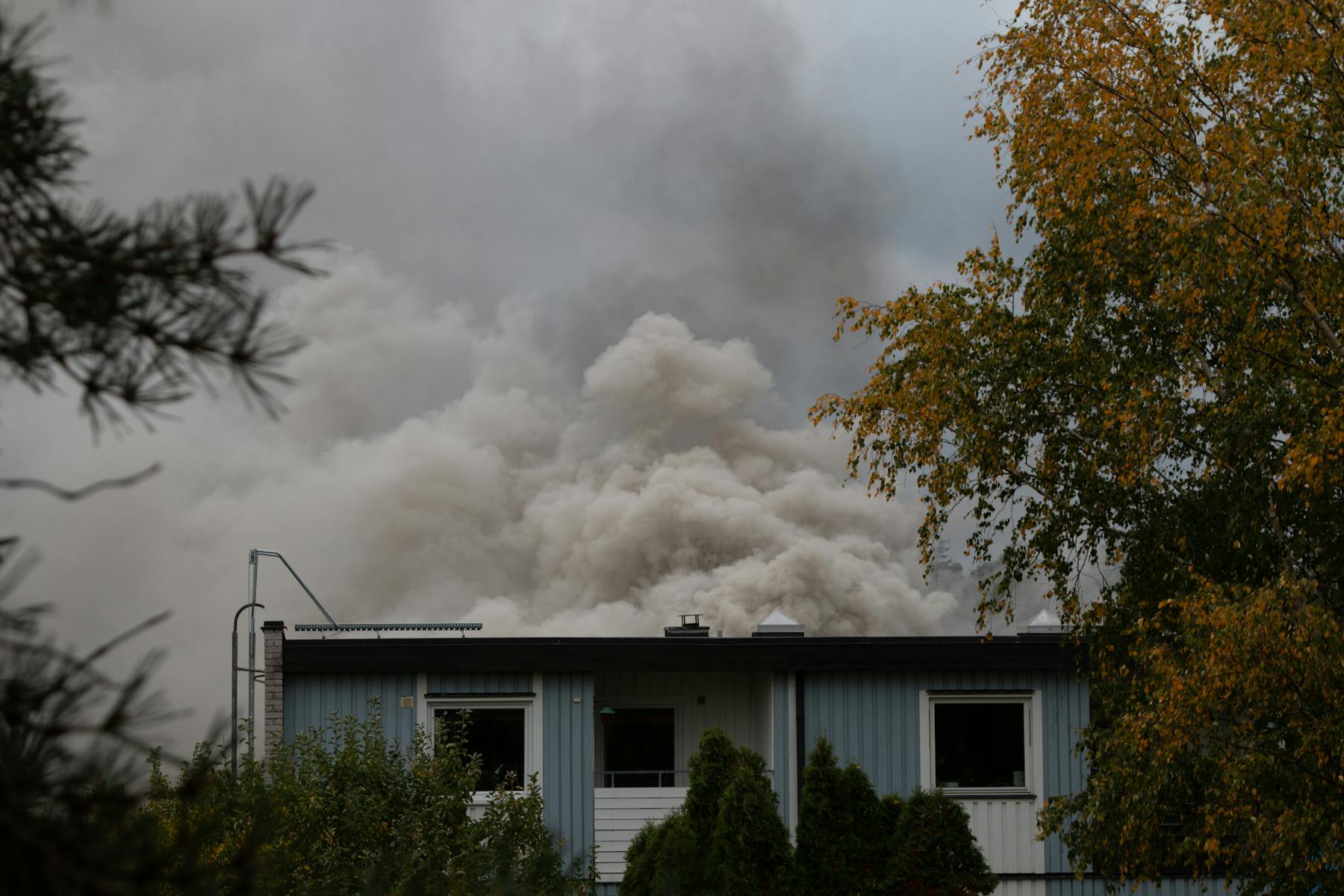
A home fire leaves more than visible damage. Smoke, soot, and invisible gases can linger in the air and on surfaces long after flames are out. Before choosing between air and surface sampling, it helps to understand soot vs. smoke damage so you know whether the concern is visible residue, airborne particles, odor, or a combination of all three.
Knowing what to test and when helps you clean correctly, document progress, and decide whether more verification is needed before using the space again. This guide explains the difference between air quality testing and surface testing after a fire. For a broader look at when each service applies, review our breakdown of fire damage assessment vs smoke damage assessment before deciding whether your property needs structural fire documentation, smoke residue testing, or both.
You will learn what each method answers, where each one shines, and how to choose the right approach for your situation. For homeowners in San Diego County, this often means looking at both airborne smoke contaminants and settled residues on surfaces, HVAC components, and belongings. If you’re also concerned about chemical residues from smoke or building materials, this guide on VOC testing vs air quality testing explains when each approach is appropriate.
TL;DR
- Air testing checks what you’re breathing now. Surface testing checks what has settled and can re-contaminate later.
- After the structure is cleared for entry, start with safety screens for immediate concerns, such as carbon monoxide and fine particles.
- Use lab-based air sampling if odors, irritation, or suspected chemical off-gassing persist.
- Surface tape lift, wipe, or microvacuum samples can help identify soot, char, ash, and PAH/SVOC residues on walls, contents, and HVAC components before and after cleaning.
- There’s no single federal clearance number for soot on household surfaces. Use multiple lines of evidence.
- Choose HEPA filtration and avoid ozone generators. Follow established methods when testing.
Understanding What Burned Leaves Behind
Recognizing the specific chemical residues left by a fire is the first step toward a complete recovery for your property. This knowledge allows you to address hidden threats that regular cleaning might overlook, protecting both your health and your investments.
Our certified inspectors and environmental testing specialists can evaluate smoke-affected homes. We use visual assessment, surface samples, air monitoring, and laboratory analysis to identify residual soot, ash, char, VOCs, and particulates.
How Fires Affect Indoor Environments
Fires generate a mix of pollutants:
- Gases and vapors such as carbon monoxide (CO) and volatile organic compounds (VOCs).
- Fine particles like PM2.5 (particles smaller than 2.5 micrometers) can penetrate deep into the lungs.
- Residues on surfaces, including soot, char, ash, and semi-volatile compounds such as polycyclic aromatic hydrocarbons (PAHs).
These pollutants move differently. Gases dissipate or react, while fine particles settle slowly and can be resuspended by normal activity. On the other hand, sticky PAHs can cling to surfaces, fabrics, and dust. That is why testing both air and surfaces can be useful.
Air Testing After a Fire
Air quality testing helps identify what occupants may be breathing after smoke has entered a home, especially fine particles, combustion gases, VOCs, aldehydes, and other fire-related contaminants.
This process provides a real-time view of the microscopic irritants occupants may inhale during reentry, cleanup, or ongoing use of the home. We can pair real-time field screening with lab-backed testing for VOCs, formaldehyde, particulates, and smoke-related air contaminants. This gives you clear data before making cleanup, filtration, or re-occupancy decisions.
What Air Testing Answers
Air testing tells you what people are breathing during and after cleanup. It is most useful:
- Right after reentry, screen for acute hazards, such as CO.
- When odors persist despite basic cleanup.
- When sensitive occupants are present (infants, older adults, or those with asthma).
Our air quality monitoring and VOC/formaldehyde sampling can help identify whether lingering odors are coming from airborne chemicals, particulates, or another source.
Common Air Testing Approaches
Different testing techniques answer different questions after a local structure fire or wildfire smoke intrusion. A qualified environmental testing plan may combine real-time screening, canister sampling, aldehyde sampling, and particulate monitoring to document current indoor conditions.
- Real-time screening using handheld CO meters and optical PM2.5 monitors for immediate checks. These are screening tools, not lab-grade evidence, but they guide urgent decisions like ventilation and filtration.
- Integrated laboratory sampling, including VOCs by EPA Method TO-15A using evacuated canisters, identifies dozens of VOCs at low levels.
- Aldehydes (like formaldehyde and acrolein) by EPA Method TO-11A with DNPH cartridges and HPLC.
- Particles and smoke tracers using filter sampling for gravimetric mass or specialized analysis.
Interpreting Results
Residential health benchmarks vary by pollutant and jurisdiction. Outdoor standards, like the EPA’s PM2.5 National Ambient Air Quality Standards, apply to ambient air and are not binding indoors, but they provide context.
For air cleaners, choose HEPA filtration sized to the room and avoid ozone-producing devices. EPA notes that ozone can irritate the lungs and that federal agencies haven’t approved ozone generators for use in occupied spaces.
Surface Testing After a Fire
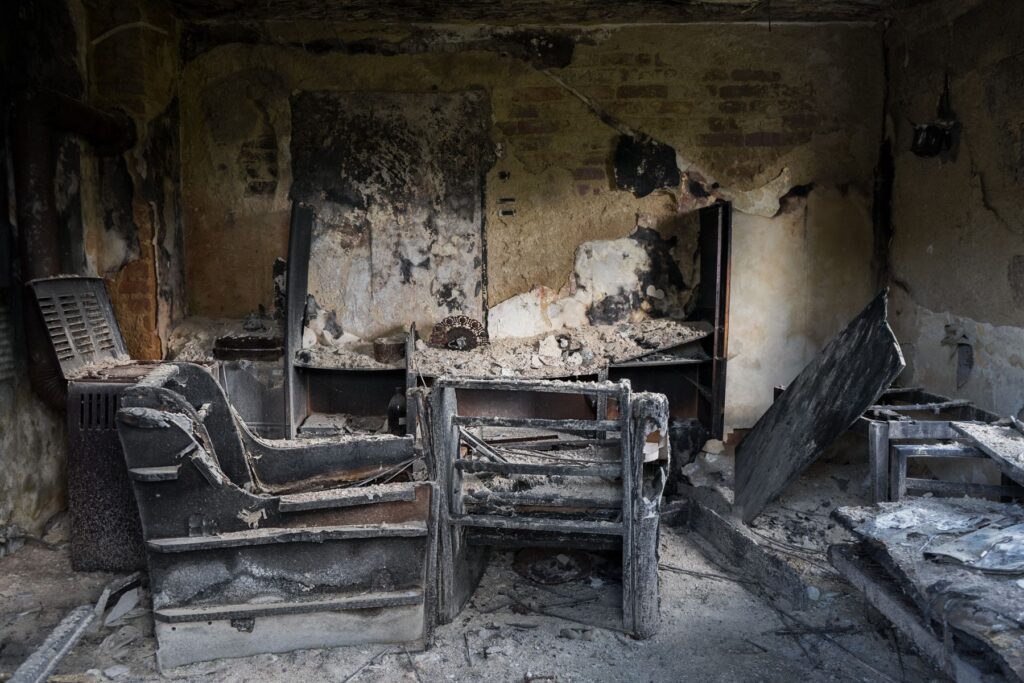
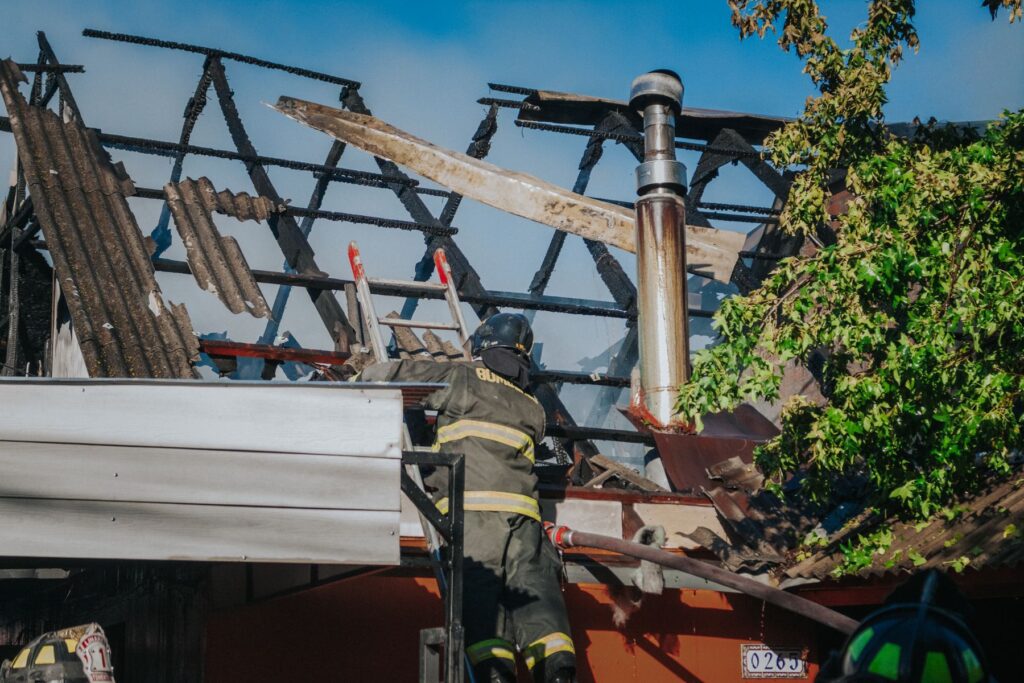
Surface testing helps identify settled soot, ash, char, and smoke-related residues that can remain on walls, shelves, textiles, electronics, HVAC returns, and other contents after the air appears clearer.
These tests can document where residues remain, guide the scope of cleaning, and provide before-and-after data for restoration and insurance discussions. Our surface wipe sampling, soot/char/ash tape-lift analysis, and post-remediation evaluations can help verify whether targeted areas have been adequately cleaned.
What Surface Testing Answers
Surface testing checks whether smoke residues remain on building materials, contents, and in HVAC components. It’s most useful:
- To verify the need for, or the success of, cleaning.
- To document damage and restoration for insurance.
- When stains are not obvious, but odors return after ventilation.
When smoke odor returns after ventilation, we can sample HVAC returns, high shelves, window tracks, and other areas prone to residue to help locate the source.
Common Surface Testing Approaches
Different testing techniques offer a layered defense against lingering chemical residues left by local house fires or seasonal wildfires.
- Wipe sampling for PAHs and related SVOCs can be analyzed using the EPA SW-846 Method 8270E. At the same time, soot, char, and ash are often evaluated using tape-lift, wipe, or microvacuum samples, which are reviewed under a microscope or by other lab methods.
- Tape lifts or microvacuum sampling for microscopy to confirm soot, char, and ash.
- Targeted material sampling when residues appear embedded in porous items.
Interpreting Results
There’s no single federal clearance level for soot or PAHs on household surfaces. Practitioners typically rely on multiple lines of evidence. These include visual observations, odor conditions, air measurements, surface sample results, and before-and-after comparisons in the same targeted areas.
Industry standards for fire and smoke restoration describe processes and post-remediation evaluation, without prescribing a single numeric pass/fail value for all homes.
Air Quality Testing vs Surface Testing: Quick Comparison
This breakdown helps distinguish what is lingering in the breeze and what has settled onto your cherished belongings. It can also help clarify whether the next step should focus on the breathing zone, settled particles on surfaces, or both.
| Question | Air Testing | Surface Testing |
| What it answers | What are we breathing now? Are acute hazards present? | What remains on walls, contents, and HVAC that can re-release or transfer to skin? |
| Best timing | Early, during reentry and after initial ventilation/filtration | After gross debris removal and before/after detailed cleaning |
| Typical methods | CO meter, PM2.5 sensors; lab methods TO-15A (VOCs), TO-11A (aldehydes) | Wipe samples for PAHs by SW-846 8270E; tape lifts/microscopy for soot/char |
| Strengths | Captures current exposure; can track changes hour-to-hour | Shows where residues persist; documents cleaning effectiveness |
| Limits | Short-term snapshot; may miss settled residues | Not a direct measure of what you are breathing; technique sensitive |
| When to prioritize | Strong odors, health symptoms, fuel-burning appliances, and poor ventilation | Visible film or staining, recurring odors, insurance documentation, and electronics corrosion risk |
When to Use Both
In many fires, the best answer is not either/or. A practical sequence is:
- After the structure has been cleared for safe entry, screen air for immediate concerns such as CO and PM, then begin ventilation or HEPA filtration when conditions allow.
- After basic cleanup, use targeted air sampling if odors or irritation continue.
- Use surface wipes, tape lifts, or microvacuum samples to locate stubborn residues and verify cleaning, especially in HVAC returns, high shelves, window tracks, electronics-adjacent areas, and frequently touched surfaces.
Examples
These examples show how people can use testing to move from uncertainty to a targeted cleanup plan.
Small Kitchen Fire
A pan flames out on the stove. The fire is contained, but smoke fills the kitchen and adjacent rooms. After airing out and running a HEPA purifier, PM2.5 readings drop, and no CO is present. A week later, a smoky odor returns when the HVAC runs.
Surface samples from the return grille and the top of wall cabinets show elevated PAHs or visible soot/char indicators, confirming residues that normal dusting missed. Focused HEPA vacuuming, damp cleaning with detergent, and an HVAC filter change remove the source, and follow-up wipes show a marked decline.
Wildfire Smoke Intrusion
During a regional wildfire, outdoor air is unhealthy for several days. The homeowner creates a clean room with a properly sized HEPA purifier and keeps windows closed until the outdoor Air Quality Index improves.
After the smoke clears, the air smells fine, but a gray film is visible on the window tracks. Air sampling shows low VOC levels and normal indoor P levels. Surface wipes on window tracks and a high shelf confirm soot and PAHs. Post-cleaning wipes and a new HVAC filter document improvement for insurance records.
Actionable Steps / Checklist
A clear sequence helps you protect occupants first, clean methodically, and document whether the work was effective.
- Don’t reenter a fire-affected structure until local authorities, the fire department, or a qualified safety professional says it is safe.
- Check for CO with a functioning alarm and leave immediately if any alarm sounds.
- Do not run fuel-burning appliances or generators indoors.
- Ventilate when the outdoor air is cleaner. Otherwise, keep windows closed and run a HEPA air cleaner sized to the room.
- Replace the HVAC filter with a high-efficiency filter compatible with your system.
- HEPA vacuum loose dust, then damp-wipe hard surfaces with mild detergent.
- Launder washable fabrics. Set aside porous items that hold odor for specialized cleaning.
- Prioritize air testing if odors persist, occupants feel irritation, or you suspect off-gassing.
- Prioritize surface testing if film or staining remains, electronics show corrosion, or you need documentation of cleaning effectiveness.
- For VOCs, ask labs about EPA Method TO-15A; for aldehydes, EPA TO-11A.
- For PAHs on surfaces, ask about SW-846 8270E analysis of wipe samples.
- Keep before/after photos, filter change dates, and any lab reports.
- Re-test targeted areas after cleaning when initial results showed residues, odors continue, or documentation is needed for a restorer, adjuster, or property owner.
Glossary
These definitions can help you understand lab reports, restoration recommendations, and testing options.
- PM2.5: Fine particles smaller than 2.5 micrometers that can reach deep into the lungs.
- VOCs: Volatile organic compounds that evaporate easily and can irritate eyes, nose, and lungs.
- PAHs: Polycyclic aromatic hydrocarbons, a group of sticky smoke-related chemicals found in soot.
- CO: Carbon monoxide, a colorless, odorless gas that reduces oxygen delivery in the body.
- DNPH: A chemical reagent used in cartridges to trap aldehydes for analysis by HPLC.
- TO-15A: An EPA canister method for measuring many VOCs in air at low concentrations.
- SW-846 8270E: An EPA method for analyzing semi-volatile organics like PAHs in various sample types.
- HEPA: High-efficiency particulate air filtration that removes at least 99.97% of 0.3-micron particles.
FAQ
Q: Do I need both air and surface testing after a fire?
A: After a fire, you may need both air and surface testing. Air testing checks what you are breathing now, while surface testing shows where residues can keep recontaminating the air and your hands.
Q: Are consumer PM2.5 sensors enough?
A: PM2.5 sensors are useful for screening and tracking trends. However, laboratory methods are better for identifying specific chemicals, documenting conditions, and supporting post-cleaning verification.
Q: Is using an ozone generator a good shortcut to remove smoke odor?
A: An ozone generator isn’t a good way to remove smoke odor. Ozone can irritate the lungs and is ineffective at removing many indoor pollutants. Stick with cleaning, ventilation, and HEPA filtration.
Q: When can I stop testing?
A: Further testing is usually not needed once the agreed project scope has been met and visual and odor concerns have been resolved. You may also stop testing if targeted follow-up air or surface samples support that the cleaning goals were achieved.
Final Thoughts
You don’t have to choose between air and surface testing blindly. Air testing helps determine what occupants are breathing now, while surface testing shows what has settled and could keep causing odors, staining, or re-contamination.
Is your San Diego home affected by a small structure fire, a nearby smoke event, or a regional wildfire? Rarefied Air Environmental can provide targeted air, surface, soot, VOC, particulate, and post-remediation testing to support cleanup decisions based on evidence rather than guesswork.