
Mold worries can spiral fast. One pro says you need expensive lab testing; another says a simple inspection will do. The truth sits in the middle, and knowing the difference saves time, money, and stress.
This guide explains mold tests vs mold inspections in plain English. You will learn what each one does, when each is worth it, and how to choose confidently for your home or building. If you have visible mold and need expert advice on whether testing is required, let our certified inspectors conduct a thorough mold test.
TL;DR
- A mold inspection is a visual and moisture-focused assessment to find the source, extent, and cause of mold.
- A mold test collects samples for lab analysis to identify and quantify mold. Routine testing is generally not necessary when mold is visible unless you suspect hidden mold or need documentation for legal or insurance purposes.
- There are no federal health-based limits for indoor mold, so test numbers do not equal pass or fail.
- Choose inspection first to locate moisture and damage. Add testing for special cases like hidden growth, documentation, or post-remediation checks.
- Fixing moisture and cleaning properly matter more than chasing spore counts.
What a Mold Inspection Covers
A mold inspection is a structured evaluation of your space to find dampness and mold. A qualified inspector gathers background details, checks for past leaks or floods, and then inspects rooms, surfaces, and building systems. Tools often include moisture meters, hygrometers (humidity), and thermal imaging to spot wet areas behind finishes. The emphasis is on finding moisture sources and assessing the location and cause of mold growth, not just lab numbers.
A widely referenced framework is ASTM D7338-14, a guide for assessing fungal growth in buildings. It outlines steps like collecting building history, evaluating moisture pathways, conducting a systematic visual survey, and deciding whether advanced methods are warranted. The goal is to document where moisture has intruded and what materials are affected so you can plan practical fixes.
Public health agencies back this approach. Centers for Disease Control and Prevention (CDC) and National Institute for Occupational Safety and Health (NIOSH) note that thorough visual inspections and tracking musty odors are more reliable than short air samples for routine building evaluations. They stress correcting dampness quickly, since moisture control is the key to mold control.
What a Mold Test Measures
A mold test involves collecting air, surface, bulk, or dust samples for a lab to analyze. Common methods include:
- Air spore traps: Capture airborne spores over a set time for microscopic counting.
- Tape lifts or swabs: Collect material from a spot on a surface to see what is present.
- Culture plates: Grow viable fungi from air or surfaces to identify species.
- Dust PCR: Analyze dust for DNA of target mold species.
Testing can be useful in specific situations, such as verifying cleaning success after remediation, differentiating mold from soot or dirt, or providing documentation for legal or real estate purposes. That said, both the U.S. Environmental Protection Agency (EPA) and the CDC state that routine sampling is unnecessary when mold is visible, and there are no health-based federal limits for indoor mold.
Numbers from short-term sampling can fluctuate and do not map cleanly to health risk. A notable example is ERMI, a dust-based Environmental Relative Moldiness Index developed by EPA researchers. EPA characterizes ERMI as a research tool and does not recommend it for routine public use in homes or schools.
Mold Test vs Mold Inspection: The Key Differences at a Glance
Understanding these distinctions helps property owners and consultants choose the most appropriate, cost-effective first step for investigating moisture sources and potential mold issues.
| Aspect | Mold Inspection | Mold Test |
| Primary Purpose | Find moisture sources, extent of damage, and visible/likely mold | Identify or quantify mold in collected samples |
| Core Methods | Visual survey, moisture measurements, building history, odor checks | Air, surface, bulk, or dust sampling with lab analysis |
| When It Shines | Visible mold, musty odors, water damage, and deciding the scope of repairs | Hidden-suspected growth, post-remediation verification, documentation for transactions or disputes |
| Limits | May not identify hidden mold without opening assemblies | Results vary with time and conditions; no federal pass/fail limits for mold |
| First Move | Usually, the first and most cost-effective step | Add selectively after an inspection shows it will help make decisions |
When to Choose an Inspection, Testing, or Both
Start with an inspection in nearly all cases. If a wall feels damp, paint is bubbling, or you smell a musty odor after rain, an inspection will trace the moisture path and outline repairs. EPA’s practical guidance even notes that small areas under about 10 square feet are often DIY-cleanup with proper safety, as long as the water problem is fixed.
Add targeted testing when it will help make a decision, uncover hidden mold, or provide required documentation for legal, insurance, or medical needs. Useful triggers include:
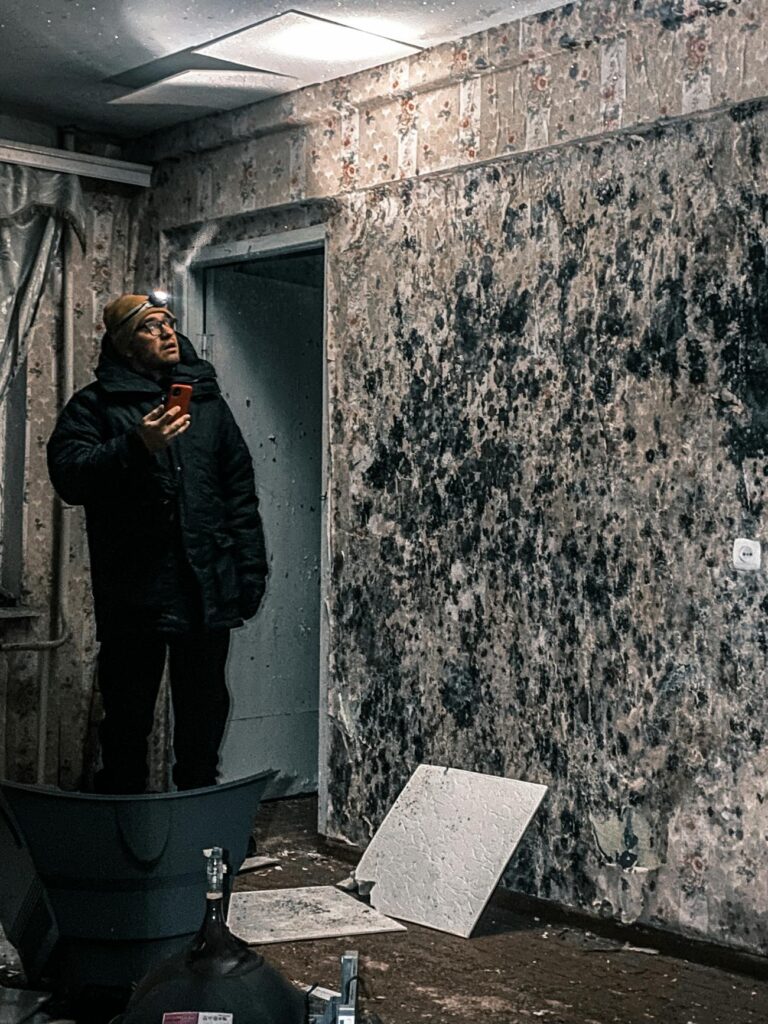
- Hidden mold suspected but not visible, like behind vinyl wallpaper or inside a wall cavity.
- Post-remediation verification to check that cleaning met objectives; sampling can confirm that indoor air is similar to local outdoor air after work.
- Sensitive occupants where a clinician wants species data to inform medical care.
- Real estate, insurance, or legal needs that call for third-party lab results.
Avoid purely curiosity-driven testing. Without a moisture fix and clear inspection findings, sample numbers can distract from the root problem.
How Pros Conduct A Quality Inspection
A solid inspection typically includes:
- Interview and history: Leaks, floods, musty periods, HVAC service, and recent renovations.
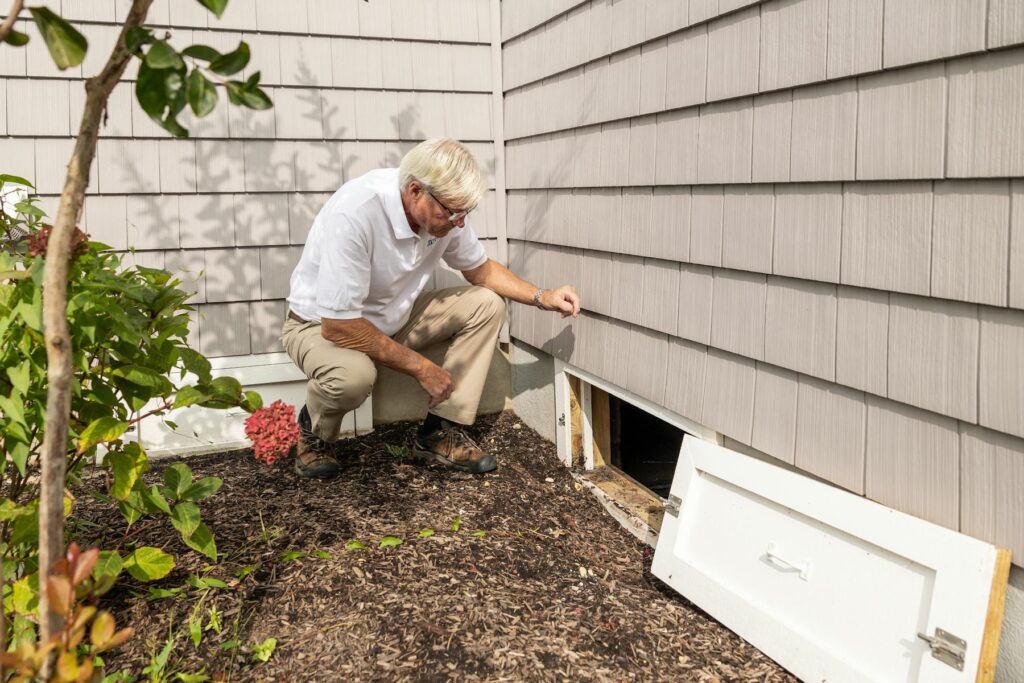
- Exterior walk-around: Drainage, gutters, grading, penetrations, and roof-water paths.
- Interior survey: Ceilings, walls, baseboards, closets, plumbing, windows, and below sinks.
- Measurements: Spot moisture readings, relative humidity, and temperature; selective thermal imaging.
- Documentation: Notes, photos, and a clear scope for drying, removal, or further probing.
For larger facilities, NIOSH’s Dampness and Mold Assessment Tool (DMAT) helps teams systematically score rooms for visible mold, water stains, dampness, and odors so they can prioritize and track fixes.
Testing Methods in Context
If testing is warranted, match the method to the question:
- Clearance or verification: Spore traps indoors plus an outdoor reference on the same day, along with targeted surface samples of cleaned areas.
- Hidden issues: Cavity air sampling or small exploratory openings are used when hidden mold is suspected, guided by moisture and infrared readings.
- Material decisions: Tape lifts on stained surfaces to confirm mold vs dirt before costly replacement.
Remember the interpretation caveats. Spore counts and colony-forming units reflect only a snapshot and cannot be interpreted against any federal health threshold. Use them alongside inspection findings, not instead of them.
Examples
The examples illustrate the practical application of inspection and testing protocols in real-world scenarios.
Small Bathroom Leak
A condo owner notices a musty smell in a hall bath and a faint stain on the ceiling below. An inspection finds an active drip at the tub overflow gasket and elevated moisture in the adjacent wall.
The pro recommends fixing the gasket, removing a small section of wet drywall, and drying the cavity. No lab testing is ordered because the damage is localized and visible. After repairs, a brief reinspection shows dry materials and no odor, so the job is closed without sampling.
Post-Remediation Verification in a Basement
A finished basement flooded after a storm. Walls and carpet were removed to 2 feet, and the area was cleaned and dried. To document success for the owner’s insurer, the consultant performs a visual clearance, confirms normal moisture levels, and collects indoor and outdoor air samples plus tape lifts on treated studs.
The lab reports show indoor mold types and concentrations similar to those found outdoors, ensuring that remediation was successful and the indoor environment is safe, in line with EPA guidance for post-remediation checks. The consultant issues a concise clearance letter for the claim file.
Actionable Steps and Checklist
Following these steps, from booking an inspection to selective testing and post-remediation verification, ensures a systematic, safe, and effective approach to mold remediation.
- Triage now: If you see or smell mold, fix the water source and start drying within 24 to 48 hours.
- Book an inspection first: Hire a qualified inspector with expertise in moisture management and mold detection to perform a thorough survey and provide clear documentation and action steps.
- Use testing selectively: Approve sampling only if it will locate hidden sources, verify cleaning, or satisfy a clear documentation need.
- Skip routine ERMI: Do not rely on ERMI scores for everyday decisions; it is a research tool.
- Demand clear reporting: Ask for findings in plain language, moisture readings, probable causes, and practical next steps.
- Protect sensitive people: Keep infants, older adults, people with asthma, or those who are immunocompromised out of affected areas until cleanup is complete.
- Verify the finish: After remediation, ensure the moisture problem is fixed, materials are dry, there is no visible mold or musty odor, and the space is comfortable to occupy. Sampling can support this when needed.
Glossary
This section defines technical terms and tools related to mold assessment and professional standards.
- Mold Inspection: A visual and moisture-focused assessment to find sources and extent of mold problems.
- Mold Test: Collection of air, surface, bulk, or dust samples for lab analysis to identify or quantify mold.
- Spore Trap: An air sample that captures spores on a medium for microscopic counting.
- Tape Lift: A surface sample collected with clear tape to see what is on the material.
- Post-Remediation Verification: A visual and sometimes sampling process to confirm cleaning success after mold removal.
- ERMI: Environmental Relative Moldiness Index; a dust-based research tool not recommended for routine public use.
- DMAT: NIOSH Dampness and Mold Assessment Tool that scores rooms for dampness, visible mold, and odor.
- ASTM D7338: A guide outlining a systematic approach to assessing fungal growth in buildings.
FAQ
Q: Do I need a mold test if I can see mold?
A: Usually, you won’t need a mold test if you can see mold. EPA and CDC recommend addressing visible mold by fixing the moisture problem and removing the mold. Routine sampling is unnecessary unless you’re dealing with hidden mold, legal concerns, or post-remediation verification.
Q: Are there federal limits for mold counts indoors?
A: There are no EPA or other federal health-based standards for mold or mold spores in indoor air, so test results are not pass or fail.
Q: When is testing worth it?
A: Use mold testing to verify cleanup, to help investigate hidden mold, or to provide documentation for insurance, medical, or legal needs.
Q: Are DIY mold test kits reliable?
A: CDC does not recommend mold testing for homes. Sampling is complex, and results can be misleading without a proper inspection and moisture assessment.
Q: Who should I hire?
A: Choose an experienced inspector who focuses on moisture and source-finding and can explain when, why, and how any sampling would aid decisions. Licensing and certifications vary by state, so check local requirements.
Final Thoughts
Lead with an inspection that follows the moisture. Add testing only when it helps you make a better decision or document a clean finish. Fix the water, clean correctly, verify results, and you will solve the problem with less cost and more confidence.
Need post-remediation verification for your mold removal project? We provide professional mold testing to ensure your San Diego home or office is mold-free.