
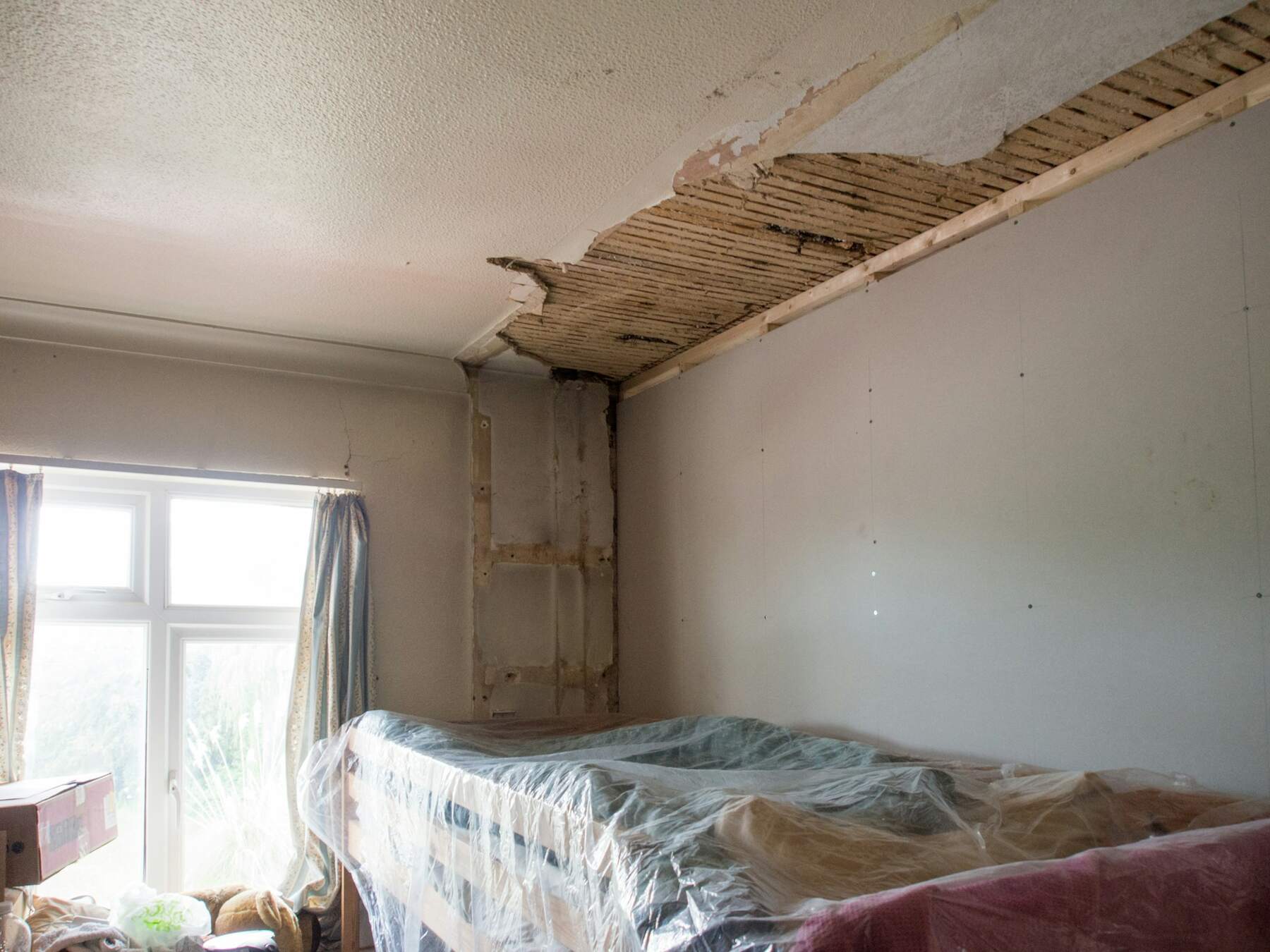
Our in-house laboratory and professional guidance have saved San Diego homeowners, renters, and property managers from the costly and health risks of asbestos exposure. Find out how to tell if a popcorn ceiling has asbestos to protect your health and make safe decisions for residential and commercial spaces.
How to Tell if a Popcorn Ceiling Has Asbestos
The likelihood of your ceiling containing asbestos is higher if your property was built before the 1980s. A visual check for damage, a rugged texture, or a slightly off-color appearance can sometimes offer initial clues. While the condition of your ceiling is a serious indicator that fibers could be loose, the only accurate way to confirm is to hire a professional for testing.
You deserve to feel secure in your home or business space. With our professional asbestos testing, you can avoid risking closer contact with asbestos, creating healthier living and working environments.
1. Review Construction Date and Records
You can learn a lot about your ceiling’s materials by checking when your home was built or renovated. By checking property records, remodel permits, or original blueprints, you can narrow the timeframe and risk profile of your specific San Diego home or commercial space.
This initial step pinpoints a period when asbestos was commonly used in building materials, providing a significant clue about the ceiling’s composition.
- Determine if the structure was built between 1950 and 1980: Throughout the 1970s, the Environmental Protection Agency (EPA) issued a series of phased bans on asbestos-containing products. Structures built or renovated during or before this period carry the highest risk of containing the hazardous material.
- Search for building permits or remodel records: Actively seek out documents filed with the San Diego County Assessor-Recorder-County Clerk. These records often specify the materials used or the year the texture was applied.
- Ask long-time neighbors or previous owners: Engage with people who have intimate knowledge of the home’s history. They may recall if and when a major popcorn ceiling application or repair occurred.
2. Check the Structure’s Physical Characteristics
Observing the texture’s appearance and how it reacts to contact provides a necessary yet non-definitive visual cue for determining asbestos presence in popcorn ceilings. Though appearance can’t fully confirm the presence of asbestos, distinct physical qualities can suggest the material is an older, riskier formulation.
Particularly in coastal San Diego, high humidity can accelerate the degradation of asbestos-containing materials, making them look more brittle.
- Examine the texture’s composition: Look for sparkling or glittery particles mixed into the texture. This vermiculite-like additive was often incorporated into the asbestos-containing material to give it a unique shimmer.
- Note the ceiling’s firmness: If the material looks extremely brittle and flakes easily, it may indicate a higher concentration of older, less-bonded material.
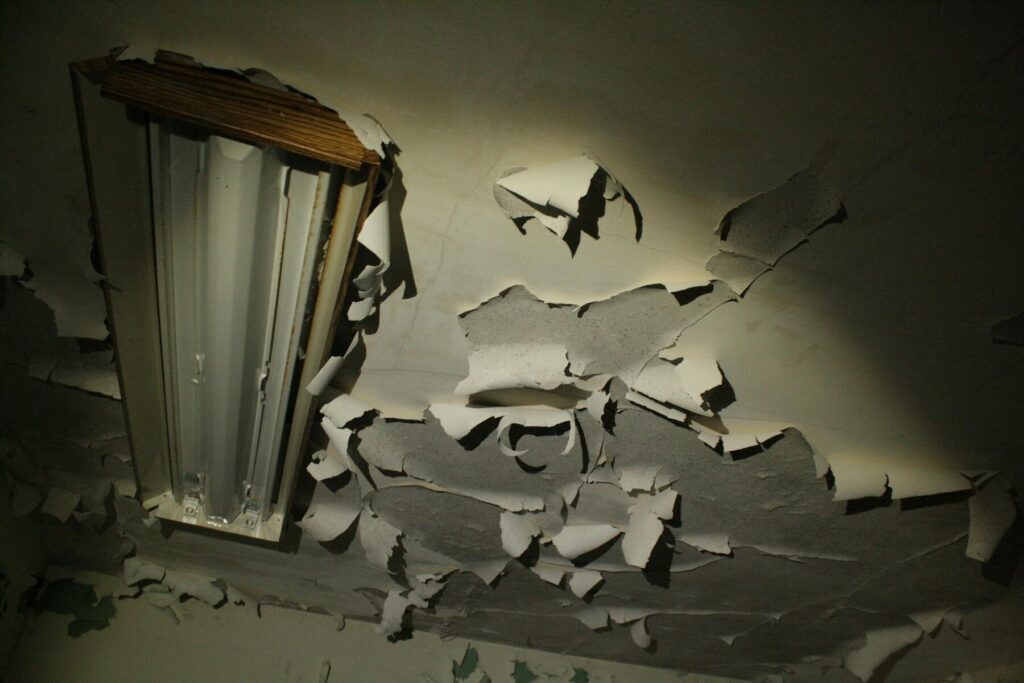
- Check for water damage or physical wear: If the texture is crumbling, flaking, or has sustained water damage, the material is considered friable. This means the fibers are easily released into the air, a highly dangerous condition requiring immediate action.
3. Secure a Professional Asbestos Laboratory Analysis
A professional laboratory test is the definite way to confirm or rule out the presence of asbestos in the ceiling. Our asbestos consultants and certified site surveillance technicians handle samples safely and follow strict testing standards. Before scheduling ceiling removal or repairs, learn how long an asbestos test takes so you can leave enough time for sampling, laboratory analysis, and results.
Our qualified, accredited lab uses sophisticated techniques to analyze safely collected samples and provide legally defensible results.
- Use a certified environmental testing firm: Schedule safe, proper bulk sampling. This guarantees that samples are collected in accordance with strict EPA protocols and regulations without releasing fibers.
- Consider air quality testing: Suppose material disturbance has already occurred, or as a precautionary measure during removal. In this case, request Phase Contrast Microscopy (PCM) air samples to determine the concentration of airborne fibers and assess immediate risk.
- Wait for the official written report: Don’t begin any demolition or disturbance until you have received the official, documented findings specifying the type and percentage of asbestos found, if any.
What Are the Warning Signs That Asbestos Testing Is Urgent
There are critical damage or alteration scenarios that can dramatically increase the risk of asbestos fiber release. This makes immediate, professional intervention important for occupant safety.
| Situation | Key Details | Action Needed |
| Planning renovation or removal | Disturbing asbestos releases dangerous fibers | Test before any work begins |
| Ceiling shows deterioration | Damaged asbestos can release fibers into the air | Immediate professional testing |
| Home built before 1980 | High likelihood of asbestos presence | Preventive testing recommended |
| Recent ceiling damage | Impact may have released fibers | Testing and possible air quality assessment |
| Buying/selling older property | Required for disclosure and safety | Pre-transaction testing |
What You Should Not Do When Inspecting the Popcorn Ceiling for Asbestos
Your commitment to safety means avoiding any action that could disturb the material. Disturbing asbestos is the primary way asbestos fibers become an airborne hazard.
| Dangerous Action | Risks | Safe Alternative |
| DIY sampling | Improper technique releases fibers; no protective equipment | Hire a certified testing company |
| Scraping or disturbing the texture | Releases microscopic asbestos fibers into the air | Keep the ceiling intact until tested |
| Using power tools on the ceiling | Creates large amounts of airborne particles | Professional abatement if asbestos is present |
| Assuming newer is safer | Some materials used asbestos into the 1980s | Test before disturbing |
| Ignoring damaged areas | Deterioration continuously releases fibers | Address immediately with professionals |
Related Questions
Why Is Asbestos in Popcorn Ceilings Dangerous?
When asbestos-containing popcorn ceilings are disturbed, microscopic fibers become airborne and can be inhaled. Repeated exposure to these fibers is a serious health risk, often leading to severe and potentially fatal lung diseases years later.
What Should I Do if My Popcorn Ceiling Contains Asbestos?
If testing confirms the presence of asbestos, your safest action is to leave the ceiling undisturbed and limit access to the area. Contact a certified asbestos abatement professional immediately for consultation on safe encapsulation or removal.
How Can You Protect Yourself Against Asbestos Exposure?
When risking asbestos exposure, avoid any activity that could damage the ceiling, such as sanding, scraping, or drilling, to keep the fibers safely contained. If any damage is observed, seal the area off immediately and seek professional advice before attempting any repairs yourself.
Conclusion
Look for warning signs, like a rough, dense texture, as well as cracks or water stains that could release harmful fibers. While there are signs of asbestos in popcorn ceilings, asbestos testing is the best way to confirm it. Let our state-licensed professionals conduct a full asbestos testing to determine if your ceiling is asbestos‑free before starting any work.