
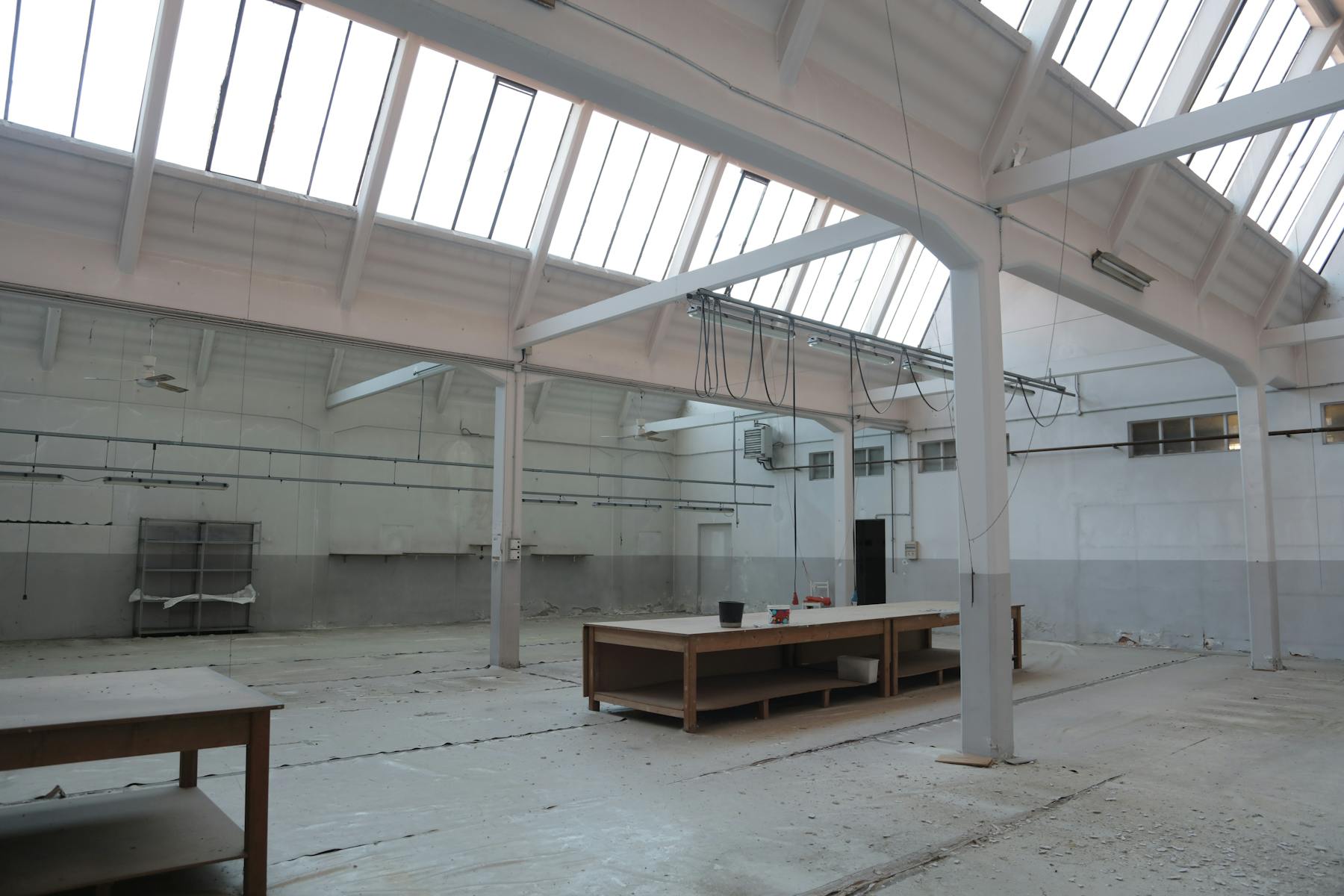
Where is asbestos found in the home? Asbestos was commonly used in flooring, which can release dangerous particles when disturbed. This guide will help you determine the hazards in your property and connect you with asbestos professionals to protect your family’s health and safety.
How to Know if You Have Asbestos in Flooring
Older homes built around the mid-1980s often contain asbestos in various flooring types, including vinyl tiles, sheet flooring, and linoleum, as well as the adhesives used to install them. These asbestos floor and backing materials pose serious health risks when damaged or disturbed during renovation. Learning to identify asbestos floor tiles by their characteristics, such as size, pattern, and installation date, is your first step toward creating a safer living environment.
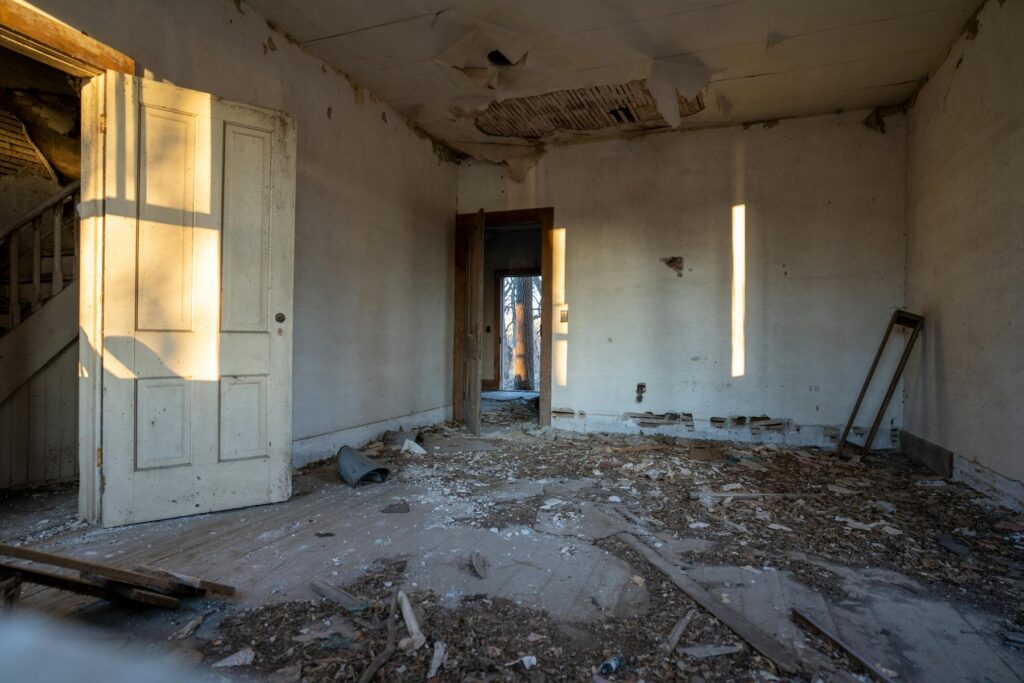
Asbestos, once celebrated for its heat resistance and durability, now lurks as a hidden danger in many homes, particularly in flooring materials. At Rarefied Air Environmental, we are committed to safeguarding the health of San Diego homeowners by shedding light on these threats. We can provide a detailed inspection and testing to accurately identify the presence of asbestos, offering you the peace of mind you deserve.
| Factors | Key Characteristics |
| Timeframe | Installed between the 1920s and the mid-1980s. |
| Material type | Floor tiles (especially 9×9 or 12×12 inches) or Asbestos vinyl sheet flooring. |
| Adhesive | Dark, tar-like substance beneath the floors. |
| Location | High-traffic areas like living areas, hallways, kitchens, and bathrooms. |
| Visual/color | Dark shades (brown colors, dark gray, black) or lighter hues (light blue, cream, pink, green). |
| Condition | Breaks easily, shows discoloration, or has a powdery residue. |
What Is Asbestos?
Asbestos is a term for a group of six naturally occurring, fibrous silicate minerals. Because the microscopic fibers can become airborne when disturbed and cause serious lung diseases, it’s classified as a hazardous carcinogen. The six regulated fibrous silicate minerals included under the broad term “asbestos” are:
- Chrysotile
- Amosite
- Crocidolite
- Tremolite
- Anthophyllite
- Actinolite
Asbestos became a staple in construction materials, particularly after World War II, when the building boom required materials that were cost-effective and durable. The inclusion of asbestos fibers provided enhanced durability, fire resistance, and helped in reducing noise levels, an appealing proposition for builders and homeowners alike.
However, it wasn’t until the latter part of the 20th century that the severe health risks associated with exposure became widely acknowledged. Initially, the dangers were obscure, and asbestos was handled without proper safety measures, leading to significant health implications for those exposed. This historical oversight has led to ongoing health and safety challenges as older buildings undergo renovations or demolitions today.
What Does Asbestos Flooring Look Like?
Asbestos flooring isn’t easily identifiable by the untrained eye, yet certain visual clues can sometimes indicate its presence. Typical characteristics include:
- A sandy, grainy texture and the presence of patterned designs that were popular in mid-20th century flooring products.
- A thickness and resilience characteristic of vinyl composite, a common material mixed with asbestos for added durability.
- Colors can also be a hint, as asbestos tiles were often produced in darker colors like black, dark gray, or green to hide dirt and wear.
However, visual inspection alone can be misleading. If such substances are found during renovations or inspections, it’s prudent to proceed with caution and consider professional testing to verify the material’s composition.
Why Is Asbestos Flooring Used?
Asphalt asbestos tiles were used for their density and moisture resistance, making them tougher and more durable. Glue-down carpet glue and wood floor glues containing asbestos were also common, ensuring that these adhesives provided a strong, lasting bond.
These asbestos-containing materials (ACM) were widely chosen for their practical benefits. Aside from that, they were popular for their affordability, making them a popular option in numerous constructions during the mid-20th century.
What Are the Types of Asbestos Flooring Products?
Asbestos was added to various flooring materials for its heat resistance and durability, making it ideal for high-traffic areas. Many companies used high concentrations of asbestos in building materials throughout homes, particularly in kitchens, hallways, and entryways.
1. Asbestos Tile Flooring
Asbestos tiles contain high concentrations of fibers that provide strength and fire resistance. These tiles were commonly installed in kitchens, bathrooms, and other high-traffic places where durability was paramount. The black mastic adhesive used underneath these tiles often contains asbestos, requiring samples to be tested before removal or renovation.
2. Asbestos Sheet Flooring
Vinyl sheet flooring manufactured around the mid-1980s often contained asbestos in its felt-like backing or cushion layer for added resilience. This type was popular in older homes due to its seamless appearance and water resistance. The asphalt-impregnated felt paper or black tar paper-like backing material often has asbestos.
3. Asbestos Flooring Adhesives
Black mastic and other adhesives used under vinyl sheet flooring and laminate contained asbestos to enhance bonding strength and heat resistance. These adhesives were standard in securing various materials to subflooring. Even when the surface appears asbestos-free, the adhesive layer beneath may still contain asbestos.
4. Asbestos Linoleum
Linoleum sheet flooring was also manufactured with backing materials that used asbestos. Particularly for older homes, the backing provided stability to the natural linoleum flooring surface. Many companies added asbestos to strengthen the product.
How to Identify Asbestos Flooring
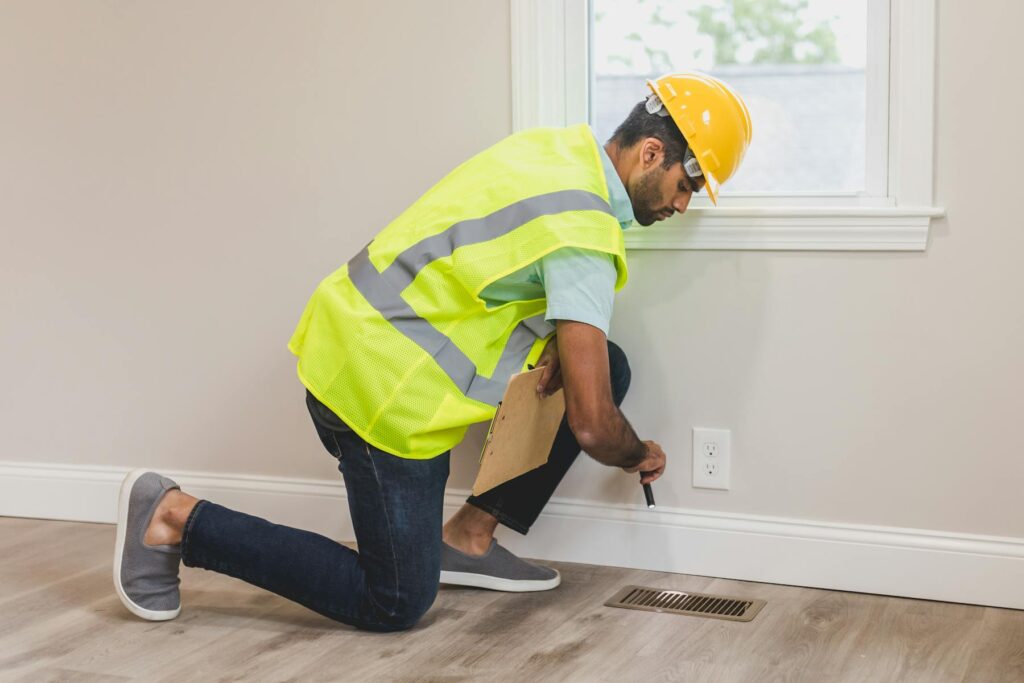
While you can conduct a preliminary check to identify potential ACM, there are limitations to what can be discerned through inspection alone. However, these observations should only guide the next step: seeking professional evaluation. We strongly discourage handling or disturbing suspected asbestos products without proper expertise and equipment.
1. Determine the Manufacturer and Brand Name of the Asbestos Flooring
Identifying the manufacturers and brands can provide essential details about whether your house contains hazardous materials. To find this information, you may need to check for identifying marks on the back of the material by cautiously loosening one tile or wiping off the glue on a damaged section.
The following are among the manufacturers and companies with a history of producing asbestos-containing flooring:
- Armstrong World Industries
- Congoleum Corporation
- Kentile Floors
- The Flintkote Company
- GAF Corporation
- American Biltrite
- Johns Manville
- Sears, Roebuck and Co.
- Goodyear Tire & Rubber Co.
- Mastic Tile Corporation of America
- Montgomery Ward
- Owens Corning/Fibreboard Corporation
- Amtico Biltrite
- EverWear
- American Olean Tile Company
- National Gypsum Company
- Celotex Corporation
- Mannington Mills, Inc.
- B.F. Goodrich Corporation
- Tarkett, Inc.
2. Determine the Age of the Asbestos Tiles
Asbestos was commonly used on floors in homes built as early as the 1920s and up to the mid-1980s. Although a home built later than the 1980s doesn’t guarantee it’s asbestos-free, knowing the construction age helps focus your investigation. ACM may still be in circulation after bans were put in place.
To better identify asbestos based on the home construction age:
- Find documentation (like inspection reports or old renovation receipts) that specifies when the floor was installed.
- Consult historical records for your area to confirm the property’s original construction date.
- Assume the floor installed between the 1920s and mid-1980s contains asbestos until proven otherwise.
- Note that even if the house is newer, an older stock of materials could have been used in subsequent repairs or additions.
3. Inspect the Size and Signs of Discoloration
Understanding the dimensions and condition of your flooring provides critical clues about its age and composition. Asphalt-based asbestos floor tiles often show distinctive deterioration patterns that reveal their hazardous nature, while size measurements can quickly narrow down whether you’re dealing with vintage materials.
- Common sizes of 9×9 or 12×12 inches suggest older asbestos-containing floor products.
- Discolored areas where asphalt binders degrade and seep out create oily patches that distinguish vintage materials from easy-to-install contemporary products.
- Older tiles with asbestos are noticeably thicker than today’s vinyl options, which were designed for insulation properties rather than just appearance.
- The adhesive used beneath suspect tiles often contains asbestos and appears as a dark, tar-like substance along cracks or lifted corners.
- Deteriorating tiles that break easily or show powdery residue indicate advanced aging and potential fiber release.
4. Get Your Flooring Tested for Asbestos in an Accredited Laboratory
Professional asbestos testing involves hiring DOSH-certified asbestos testing professionals, who can take samples of suspected materials and analyze them in a lab for asbestos content.
- Accredited labs send trained technicians to your property to safely collect samples from suspected products.
- Lab technicians record the location, material type, and condition of the flooring during sample collection.
- Certified asbestos testing facilities use Polarized Light Microscopy (PLM) or Transmission Electron Microscopy (TEM) to identify fibers.
- Laboratories provide comprehensive results showing whether materials tested for asbestos contain hazardous fibers and at what concentration.
- Accredited facilities track samples from collection through analysis, providing accurate documentation for legal and safety compliance.
What to Do if You Have Asbestos Floor Tiles
California’s Department of Health and the Environmental Protection Agency (EPA) have set forth comprehensive regulations to manage asbestos safely. These local laws cover the assessment, removal, handling, and disposal of asbestos products. For example, any renovation or demolition project affecting surfacing materials or thermal system insulation in older buildings must be surveyed for asbestos by a certified inspector.
If asbestos is found, specific protocols for notification, abatement, and disposal must be followed, including contractor certifications and worksite preparations to prevent airborne fiber release. Homeowners and contractors must adhere to these regulations for the safety and well-being of everyone involved.
1. Asbestos Testing
Before embarking on any home remodeling project, particularly in older homes where asbestos use was more common, it’s imperative to conduct thorough asbestos testing. Certified asbestos inspectors use techniques such as Polarized Light Microscopy or Transmission Electron Microscopy to accurately identify asbestos and determine its concentration in a sample.
This level of analysis confirms the presence of asbestos and also guides the decision-making process regarding the safest method for handling, removal, or encapsulation. PLM is capable of detecting asbestos fibers with dimensions greater than 1 micrometer in length and 0.25 micrometer in width, at concentrations as low as 0.25-1%. This analytical method enables the detection of asbestos at concentrations as low as 1%, which is invisible to the human eye.
2. Asbestos Flooring Encapsulation
Encapsulation is the process of safely sealing or covering your old tiles to prevent the release of airborne fibers without actually removing the existing building materials. The primary purpose is to safely contain the asbestos in place. This can be accomplished by installing new flooring, such as wood, laminate, or ceramic tile, directly over the existing material, or by simply installing carpeting.
Encapsulation is typically a faster and less expensive option, provided the asbestos floor is in good condition, and there’s no plan to disturb the lower layers. However, this method isn’t a long-term solution. The underlying materials can eventually degrade or be accidentally disturbed during future projects, leaving the asbestos in the home.
3. Asbestos Floor Tiles Removal
Removal is the process of having asbestos abatement professionals safely tear out and dispose of ACM, including the floor tiles and any underlying flooring adhesives. This is the definitive option for achieving long-term safety, as it allows you to permanently eliminate the hazard from your property.
Following the removal, you can install new flooring without any restrictions or future health concerns about the old materials. While more costly and disruptive than encapsulation, professional removal guarantees the material is handled correctly. This prevents harmful fiber release during the process, providing ultimate peace of mind.
Is Asbestos Flooring Dangerous?
Asbestos floors are generally safe when they are intact and undisturbed, as the hazardous fibers are contained within the material. The danger arises only when the material is damaged or degraded, which causes the microscopic fibers to become airborne and breathable.
Activities that can severely damage the floor and cause exposure include:
- Demolition work or remodeling that requires tearing up the floor or surrounding structures.
- Power tools used for surface refinishing, such as sanding, drilling, or grinding, can aggressively break up the material.
- Severe water damage, fire, or continuous vibration that degrades the structural integrity of the floor over time.
- Improperly trying to remove asbestos materials without professional containment procedures.
- Installing new materials, like laminate flooring, directly over damaged or loose products without first stabilizing the existing floor.
What Are the Risks of Asbestos Floor Tiles?
Asbestos flooring, when intact and undisturbed, generally doesn’t pose an immediate threat. The danger arises during refurbishments, demolitions, or when the floor becomes damaged. Activities such as cutting, sanding, or removing old asbestos flooring can disturb the material, releasing fine fibers into the air.
These fibers are so small that they can remain airborne for hours, making them easy to inhale unknowingly. Once airborne, these microscopic fibers can travel deep into the lungs and remain lodged in the lung tissue. Over time, accumulated fibers can cause inflammation and scarring, which impairs lung function and leads to serious health complications.
1. Serious Health Risks from Asbestos Exposure
The health risks from inhaling asbestos fibers are well-documented and severe. One of the most common conditions linked to exposure is asbestosis, a chronic lung disease characterized by lung scarring that leads to breathing difficulties and decreased lung capacity. More alarming, however, are the carcinogenic effects of asbestos.
Asbestos exposure is a primary cause of mesothelioma, a rare and aggressive cancer that affects the lining of the lungs and other internal organs. This disease is particularly insidious as it can take 20 to 50 years to appear after exposure.
Exposure is also linked to other forms of lung cancer and, less commonly, cancers of the larynx and ovary. The latency period between exposure and the onset of disease makes it a particularly challenging public health issue.
2. Vulnerability of Certain Age Groups
Certain populations, such as children and the elderly, are at a heightened risk of health complications from exposure. Children’s respiratory systems are still developing, and their rapid breathing rates may lead to a higher intake of fibers present in the environment.
Additionally, their longer life expectancy increases the likelihood that they will develop diseases related to asbestos later in life. The elderly, meanwhile, may already have compromised health that can exacerbate the effects of exposure.
This susceptibility underscores the necessity of maintaining asbestos-free environments, particularly in homes or buildings where these vulnerable groups reside. Managing or removing asbestos flooring and other materials can significantly reduce the chances of exposure.
3. Renovation Perils
Understanding the implications of asbestos and following proper management practices before and during renovation activities isn’t just a regulatory requirement; it’s a critical measure to safeguard public health and avoid legal and financial repercussions.
Promoting safety starts with recognizing the potential presence of asbestos in older construction and taking preemptive steps to address it properly. Homeowners should consult with asbestos removal experts and comply with local regulations regarding asbestos handling. This approach maintains the integrity of the renovation project and also reinforces a commitment to health and safety.
Ignoring these hazards can also lead to long-term consequences that affect the immediate health of individuals involved, as well as broader implications on property value and insurability. Properties known to contain asbestos may be harder to sell or insure without proper abatement documentation, leading to further financial losses.
4. Legal Implications of Asbestos
Legally, failing to comply with asbestos safety regulations can lead to hefty fines, legal liabilities, and potential lawsuits. This can happen especially if workers or residents develop asbestos-related illnesses from exposure during repairs.
There can also be additional costs from regulatory fines and potential stop mid-project if it hasn’t been handled according to the required standards. This can delay the project significantly, increase costs, and damage reputations for compliance and safety.
Related Questions
How to Tell if a Floor Is Asbestos?
Floors installed before mid-1980, especially 9×9 tiles or certain laminate flooring and vinyl sheet flooring, have a high probability of containing asbestos. Although some physical signs may hint at the material, visual inspection alone cannot reliably identify asbestos floor tiles. However, professional testing is the only way to confirm its presence.
What Does an Asbestos Floor Look Like?
Asbestos flooring is often found in thin, brittle, 9×9- or 12×12-inch vinyl floor tiles, commonly in muted earth tones like brown, gray, or maroon, as well as lighter colors such as pink or blue. These floors may exhibit a dull, speckled, or marbled finish.
Is It Safe to Live in a House With Asbestos Flooring?
Living with intact asbestos vinyl flooring or other asbestos-containing floor tiles poses a hazard, even when the fibers are encapsulated and not airborne. Any damage or disturbance, such as sanding, scraping, or breaking the floor, can release harmful fibers, posing a significant health risk and serious medical conditions like lung cancer.
How Much Does It Cost to Remove Asbestos Tiles?
The cost to remove asbestos-containing floor tiles and other asbestos flooring generally ranges from $5 to $20 or more per square foot, not including the cost of installing replacement. The final price tag depends on factors such as the amount of material, the type, and the complexity of the removal process.
Can I Remove Asbestos Flooring Myself?
Don’t attempt to remove vinyl tiles or other asbestos flooring products yourself, as this activity is both extremely harmful and often illegal in many jurisdictions. Disturbing the material releases deadly fibers that can cause serious diseases. Only licensed and certified professionals should handle the abatement.
Conclusion
Knowing whether vinyl tiles or other materials contain asbestos provides you with the clarity needed to make informed decisions about your home’s safety. When you suspect asbestos on your floors, contact Rarefied Air Environmental for professional asbestos testing and abatement services to safely assess and, if necessary, remove these hazardous materials from your home.